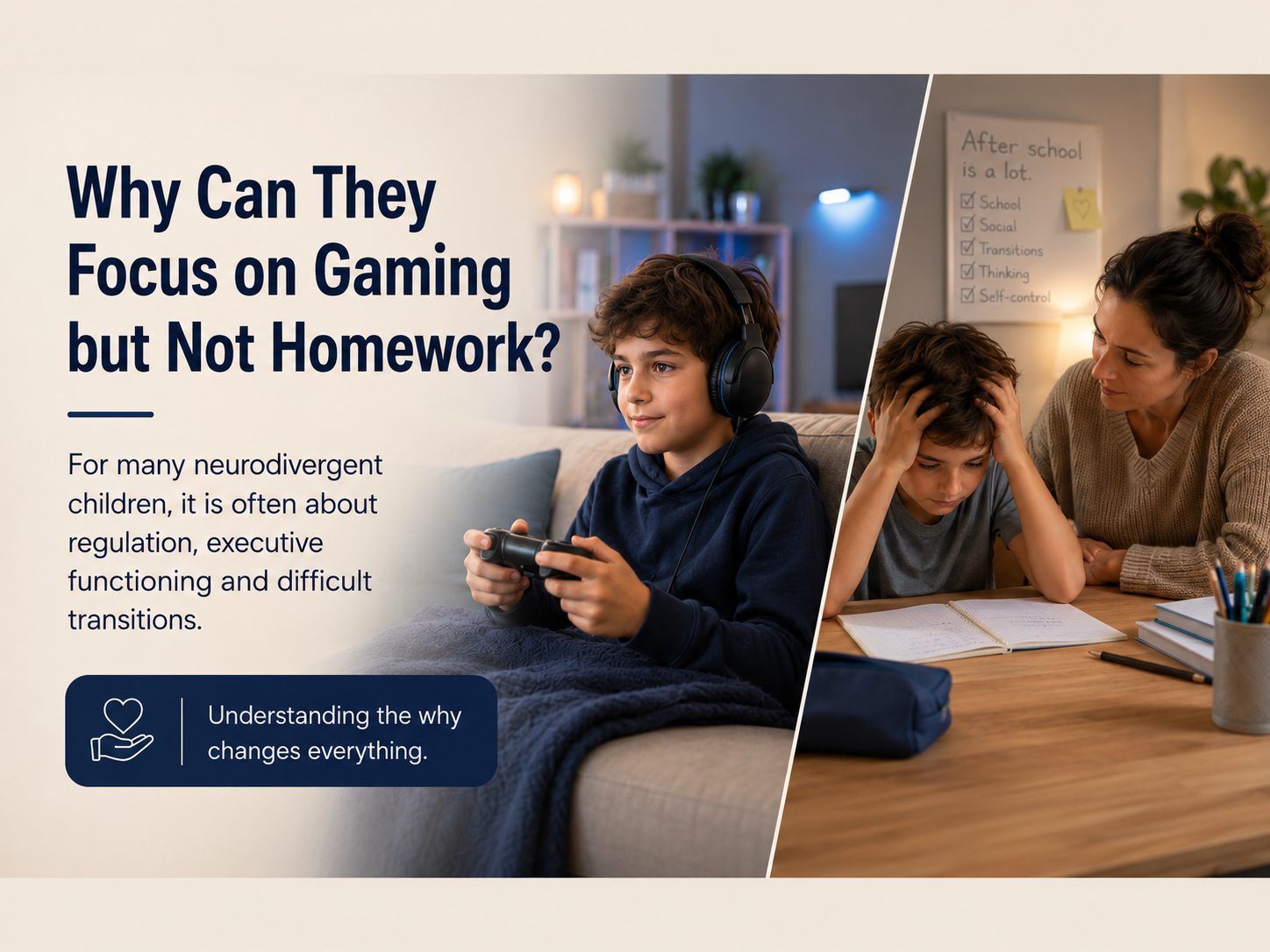
Why Can My Child Concentrate on a Game but Not Homework?
Screen meltdowns are often misunderstood as addiction, defiance or bad parenting. For many ADHD and neurodivergent children, gaming may be the only regulation tool they have left after a draining school day. This blog explains what may really be happening underneath.

When the Brain Feels Chosen: John Nash, Grandiosity and the Labels We Give People
Grandiose beliefs are often misunderstood as arrogance, defiance or attention-seeking. This blog reflects on John Nash, schizophrenia and why we need to look beneath behaviour before giving people labels.
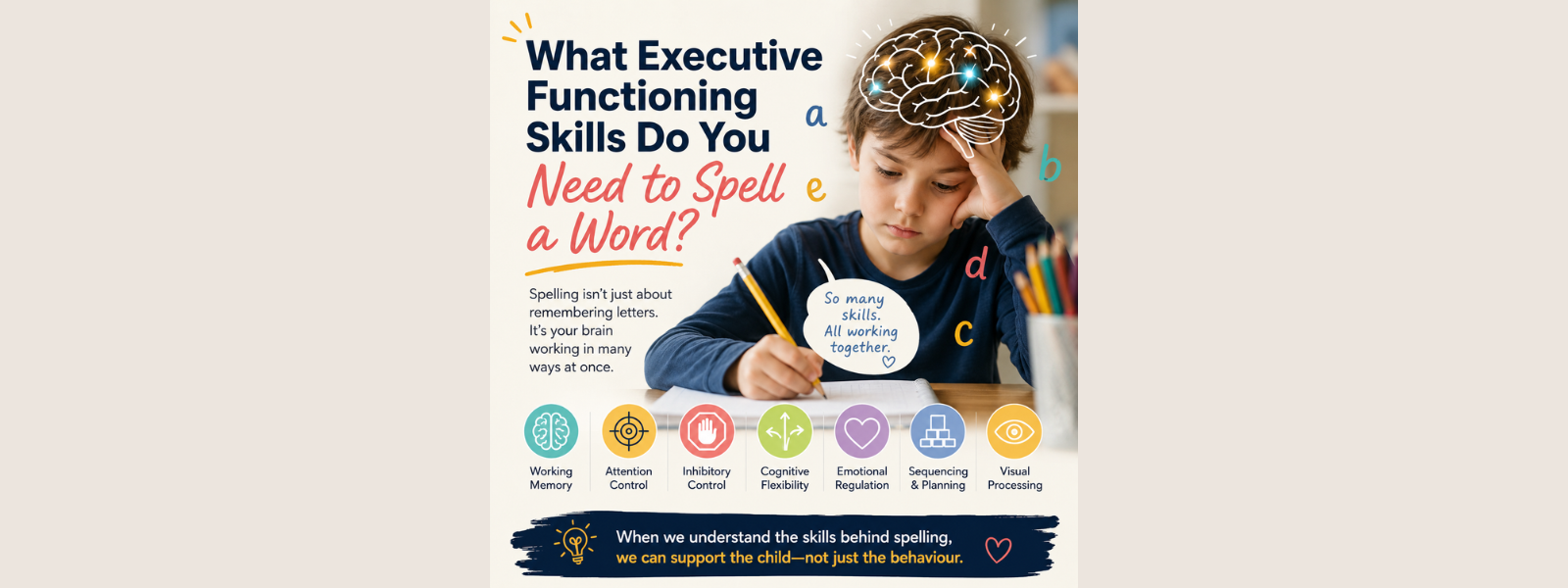
What Executive Functioning Skills Do You Need To Spell A Word?
Many people think spelling is simply about remembering words. But spelling actually relies on multiple executive functioning skills working together at the same time. This blog explores how working memory, attention, inhibitory control and emotional regulation impact spelling in autistic and ADHD childre
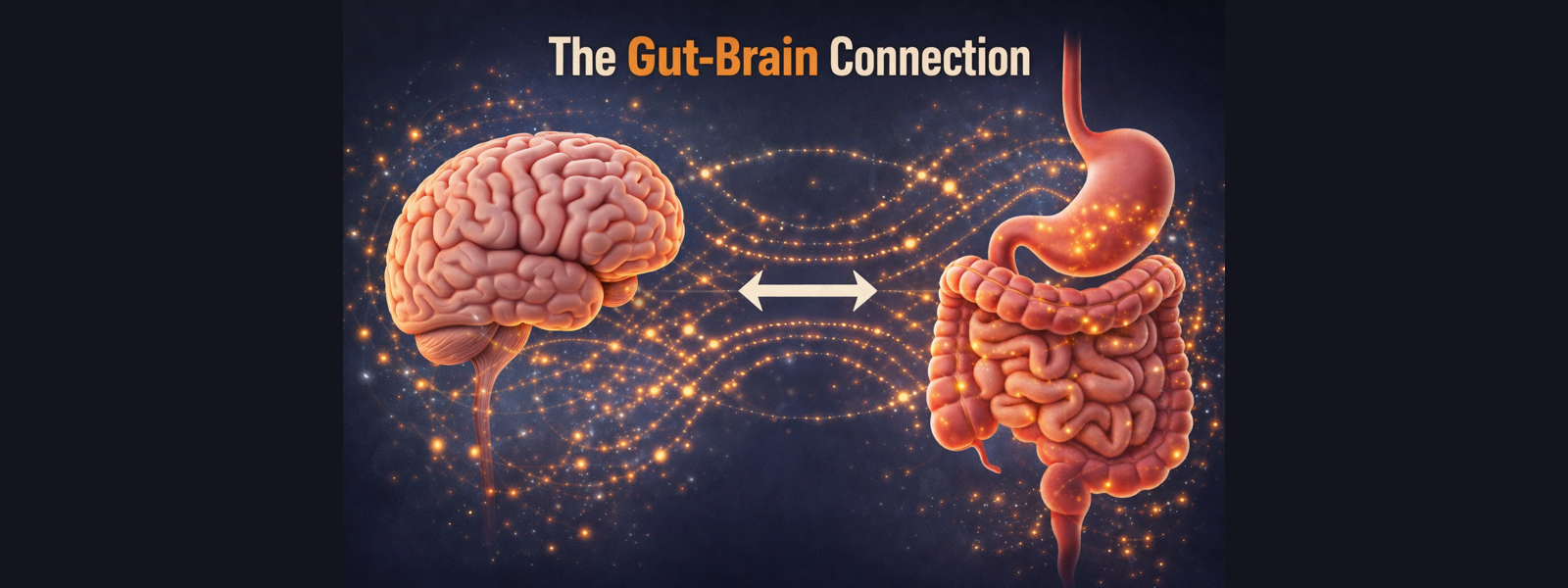
The Microbiome, Gut Health and Behaviour in Children - Is it really “just behaviour”?
Many autistic and ADHD children experience gut issues such as reflux, constipation, and food sensitivities. This blog explores how the microbiome and gut–brain connection can impact behaviour, mood, and emotional regulation.
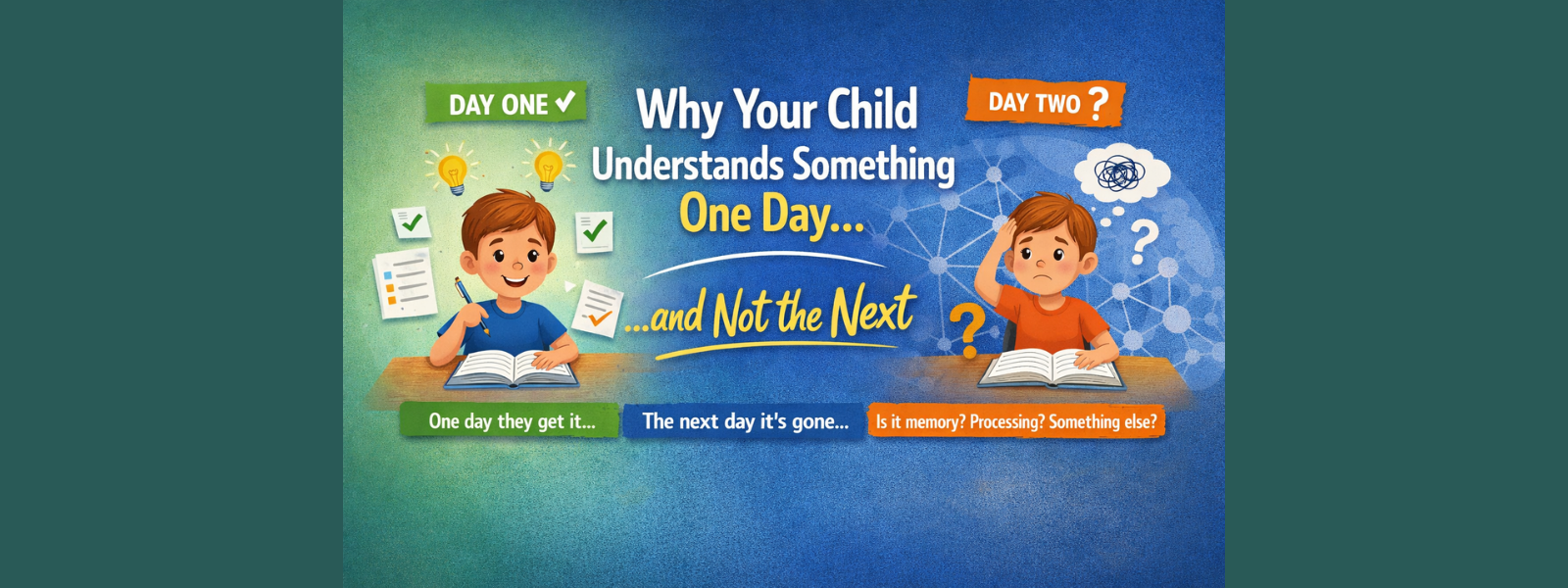
Why Your Child Understands Something One Day and Not the Next
Many children understand something one day, then seem to forget it the next. This blog explains how memory, processing, and executive functioning affect learning, and why inconsistency is often misunderstood.

Understanding Alexithymia: The Invisible Emotional Barrier
Alexithymia affects the ability to recognise and describe emotions. This article explains what alexithymia is, why it occurs, and how it impacts relationships and emotional wellbeing.
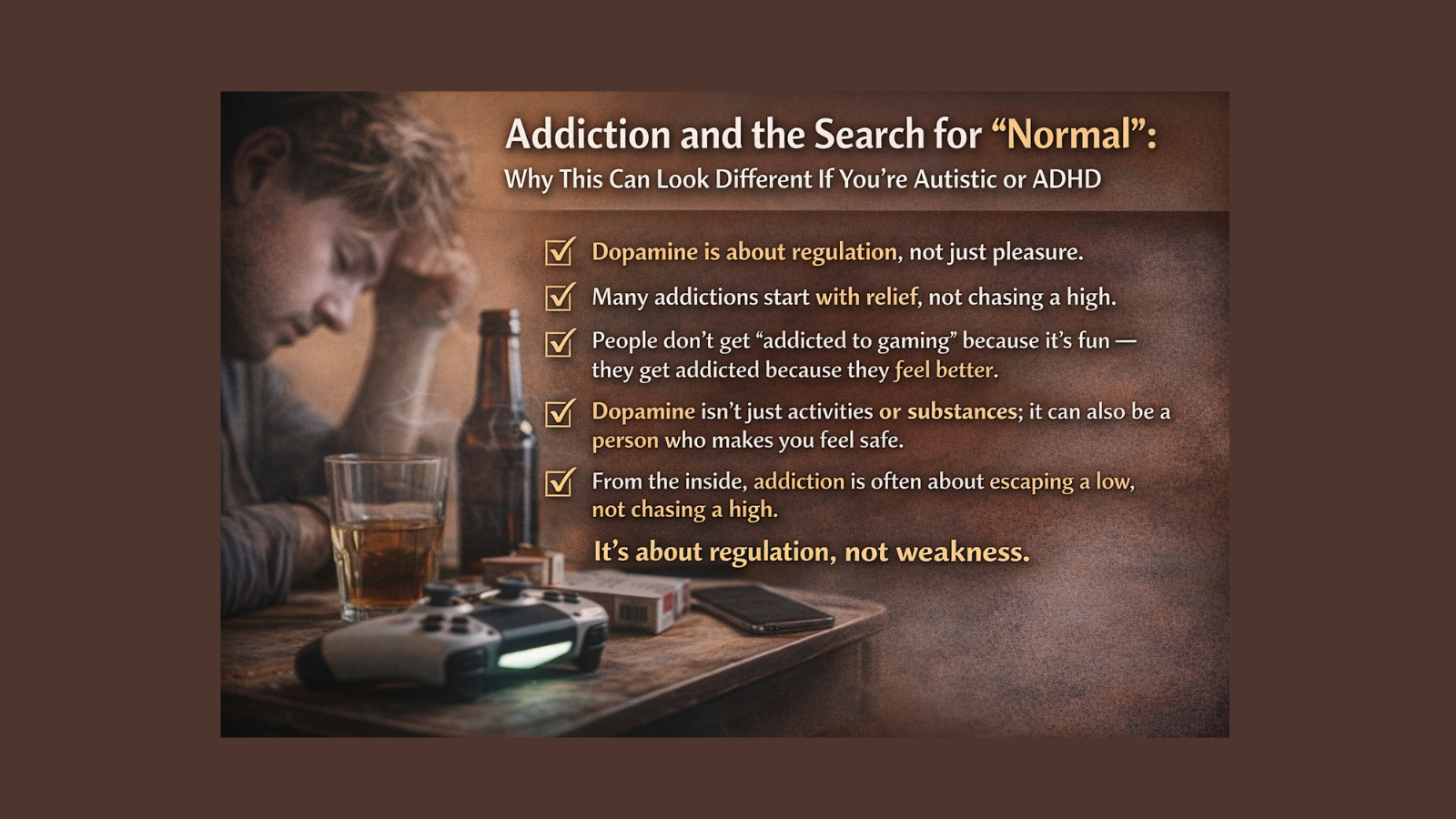
Addiction and the Search for “Normal”
Addiction is often misunderstood as a lack of willpower. This blog explores how dopamine, regulation, and nervous system needs can make addiction risk higher if you’re autistic or ADHD — and why it’s often about escaping a low, not chasing a high.

Why Strengthening Executive Function Skills is a Game-Changer for Autistic & ADHD Brains
If mornings feel like juggling jelly, executive functions might be the missing piece. This blog explains the brain’s “air traffic control” system and why strengthening it is a game-changer for autistic and ADHD daily life.

Why Do I Think Like This? - Suicidal Thoughts, Autism, ADHD and the Pain of Feeling Constantly Criticised
If you feel like you’re always getting it wrong, constantly judged, or stuck in shame, you’re not broken. This blog explains how autism, ADHD and criticism sensitivity can create painful thought loops — and what can help.

Why Those Who Are Autistic or ADHD Are So Often Labelled “Manipulative
Being labelled “manipulative” can be deeply harmful for autistic and ADHD people. What looks like manipulation is often anxiety, overwhelm, and a need for safety — not bad intent.

It’s Not Bad Behaviour — It’s an Undeveloped Skill
Schools are still punishing autistic and ADHD children for behaviours caused by undeveloped skills. This blog explains why that approach is harmful — and how misunderstanding neurodivergence is damaging children’s self-esteem, safety, and education.

When Everything Feels Personal: Understanding Criticism Sensitivity from Childhood Onwards
Many children and adults grow up feeling that everything is personal. This piece explores criticism sensitivity, how it develops in neurodivergent people, and why it often begins in childhood.
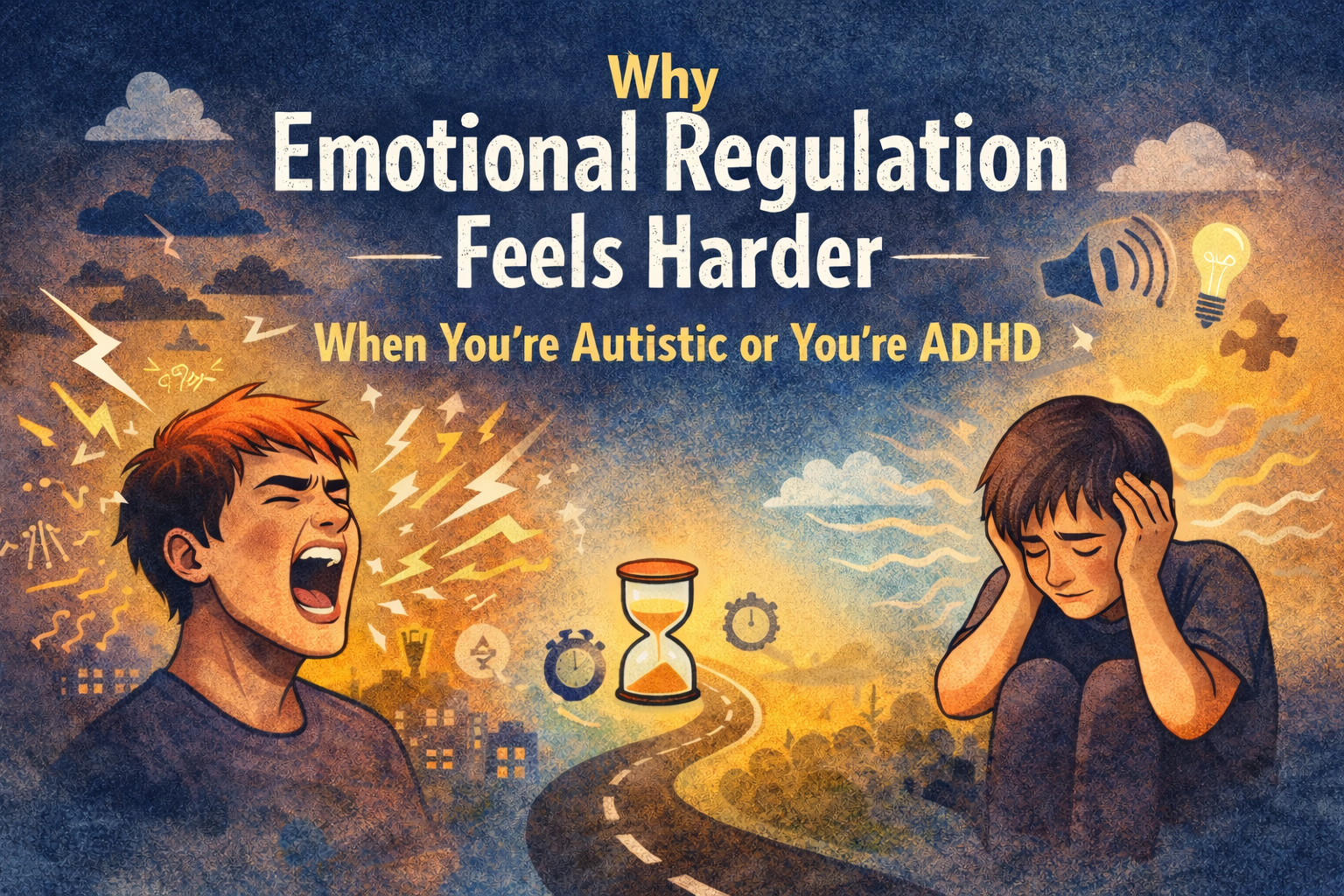
Why Emotional Regulation Is Harder When You’re Autistic or You’re ADHD – and Why Waiting Matters
If you’re autistic or you’re ADHD, emotional regulation can feel overwhelming. This blog explains how inhibitory control develops through waiting, why modern life removes that practice, and why this impacts autistic and ADHD brains more.
The Four-Tier System: When Support Comes Too Late
The four-tier system is being discussed as a form of early intervention in SEND support. But many children don’t struggle early. Some cope through primary school and only begin to struggle later, often in secondary school when demands increase sharply. A system that requires children to move slowly through tiers risks delaying help until real damage has already been done. This blog explores why waiting for repeated failure is not early intervention — and why parents need to understand what may be coming.


When Motivation Is Missing: Understanding Low Motivation in Children and Adults with ADHD or Autism
“Low motivation isn’t laziness — it’s brain wiring.”
When dopamine doesn’t fire in the usual way, starting tasks can feel impossible for ADHD and autistic people. This blog explains why — and what genuinely helps.

Stop Moving the Goalposts: Why PDA Isn’t an Excuse for Poor Behaviour
Pathological Demand Avoidance is increasingly used to explain any challenging behaviour. But when PDA becomes a catch-all label, it stops helping those who genuinely experience it. This blog explains what PDA really is, why language matters, and why understanding behaviour means looking at the ‘why’, not excusing the ‘what’.

Autism Is Not a Brand: The Hidden Dangers of Turning Difference into a Product
Autism is increasingly being packaged and sold under the banner of representation. This blog explores the dangers of profiting from autism, particularly when narrow portrayals of autistic girls risk shaping identity, increasing masking, and causing real harm to children.
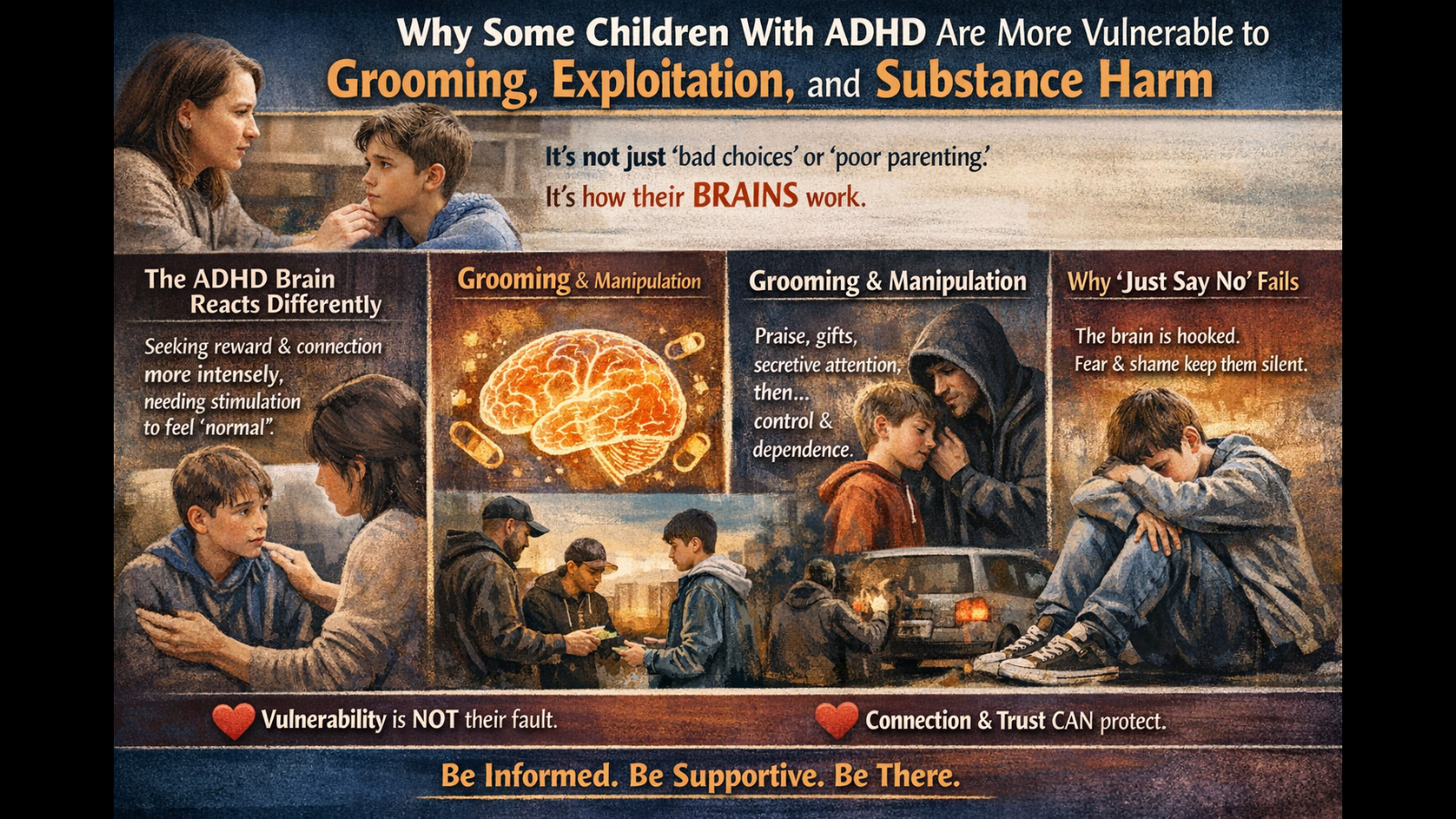
ADHD and Vulnerability: Grooming, County Lines, and the Role of the Brain
Some children with ADHD are more vulnerable to grooming, exploitation, and substance harm — not because of bad parenting or poor choices, but because of how their brains process reward, connection, and emotional regulation. This blog explains why, and what parents need to know to protect their children.

For Nearly 3 Years, SENCOs Can Hold Their Role Without Training – No Wonder ADHD Kids Are Failed
SENCos can hold their role for nearly three years without mandatory training. This article examines how that gap contributes to ADHD children being misunderstood, mislabelled, excluded, and ultimately failed by an education system that hasn’t evolved to meet neurodivergent needs.