
Criminalised, Not Criminal: Reflections on Autism and the Justice System
A reflection on autism and the criminal justice system, exploring how autistic behaviour is often misunderstood as intent, and the consequences when reasonable adjustments are not made.

From the Classroom to the Courtroom: Why ADHD Support Could Break the School-to-Prison Pipeline
Undiagnosed ADHD is often punished instead of supported — pushing vulnerable young people from school exclusion into the criminal justice system. This cycle is preventable.

Why Understanding ADHD in Your Teen Could Change Everything
Parenting a teenager with ADHD can feel emotionally intense and unpredictable. This post explains why criticism sensitivity is so common in ADHD, what’s happening beneath the surface, and how understanding it can change the way you support your teen.

Intense Emotions and ADHD
Emotional regulation is one of the most misunderstood parts of ADHD. This post explores seven key truths about why emotions feel so intense, what’s happening in the brain, and how understanding this can improve daily life and relationships.

Understanding Misdiagnosis: From Borderline Personality Disorder to Autism
Many autistic adults — especially women — are misdiagnosed with Borderline Personality Disorder before autism is ever considered. This post explores why that happens, the harm it causes, and how lived experience is often misunderstood by professionals.

Navigating Intrusive Thoughts with ADHD: Insights from Real Experiences
Intrusive thoughts are a common but misunderstood part of ADHD. This post explores what intrusive thoughts really are, why they happen, and how they affect daily life — explained through lived experience, not fear or myths.

Seven Nervous Systems Under One Roof
Many parents worry their child “only does things if there’s a reward.”
For many autistic and ADHD children, this isn’t laziness, manipulation, or bad parenting — it’s neurological.
This post explains why motivation works differently and how to support it without shame.

We Are Not the Puzzle
A reflection on why the puzzle piece symbol has never sat right with me — and why I don’t see people as the puzzle. Life is.

“Are We a Dysfunctional Family? Or Just Struggling With Tone of Voice?”
Are we really a dysfunctional family, or are we struggling to be heard? This blog explores how tone of voice, stress, neurodivergent communication, and nervous system overload can make everyday family interactions feel harder than they need to be.

“Why My Child Gets Distracted — And Why It’s Not Just ‘Not Listening’”
Why does my child get distracted so easily — and why don’t they return to the task? This blog explains how ADHD affects reaction, pausing, and working memory, and why this isn’t about “not listening.”

“Why Does My Child Only Do Things If There’s Something In It for Them?”
Why does my child only do things when there’s a reward? This blog explains why ADHD motivation is often external, how dopamine affects effort, and why this isn’t selfishness or bad parenting.

Intrusive Thoughts: What They Are, Why They Happen, and When to Seek Support
Intrusive thoughts are far more common than people realise. This blog explains what they are, why they happen, when they’re normal, and when it’s time to seek support — without shame or fear.

From Pathological Demand Avoidance(PDA) to Pervasive Drive for Autonomy(PDA)
PDA is no longer best understood as demand avoidance. This blog explains the shift from Pathological Demand Avoidance to Pervasive Drive for Autonomy, and why understanding autonomy changes how we support autistic people.

Living in Two Worlds: The Hidden Chaos Behind ADHD Success
Many people with ADHD look successful on the outside while struggling behind closed doors. This blog explores the hidden chaos, burnout, and emotional cost of masking — and why understanding your brain changes everything.
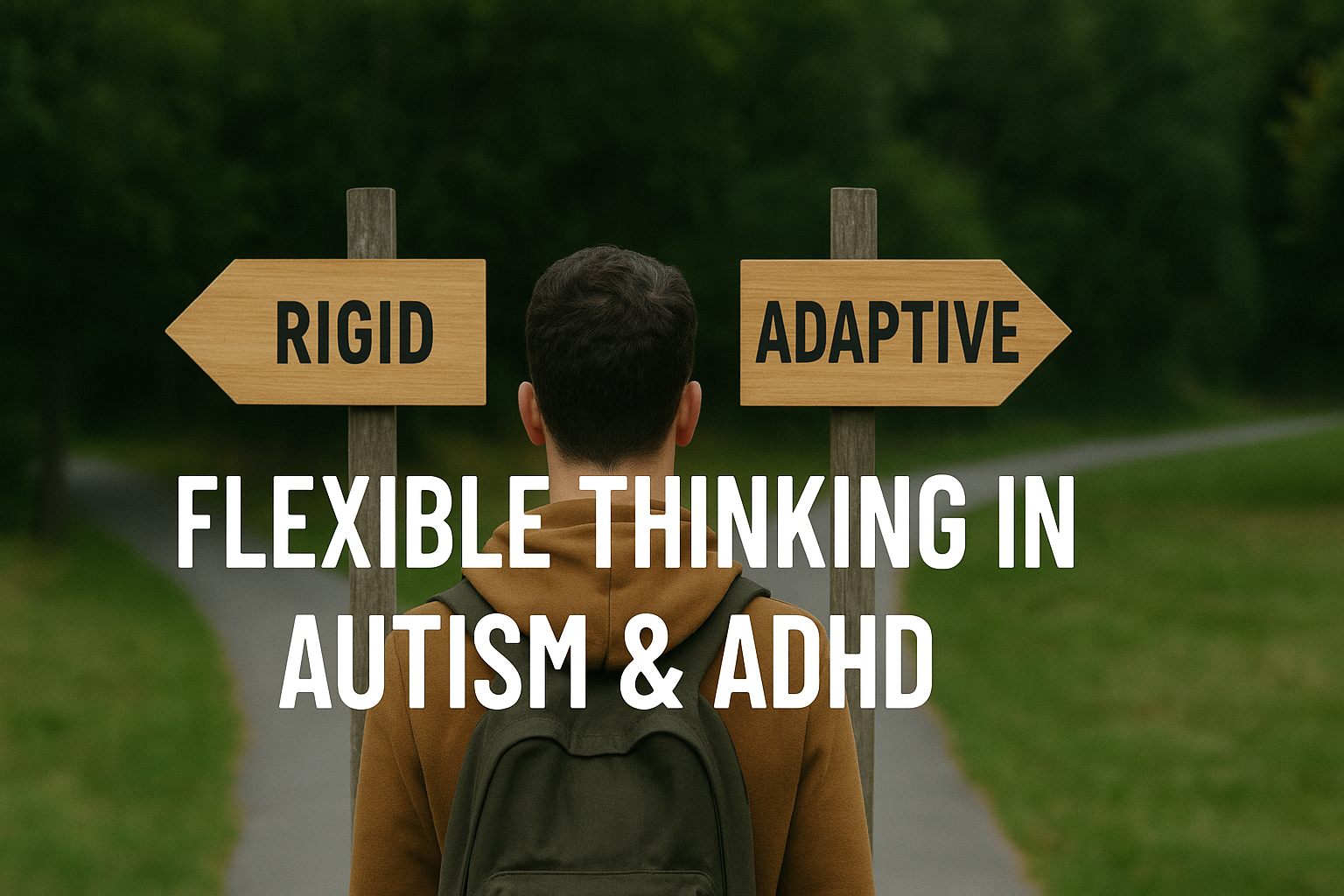
Understanding Flexible Thinking: Why Autistic and ADHD Young People Can Become Rigid — and Vulnerable to Outside Influence
Autistic and ADHD young people are often described as “rigid,” but this isn’t stubbornness — it’s a difference in flexible thinking. This blog explains why they may cling tightly to certain beliefs, become influenced by outside voices, and struggle to shift when something isn’t working. A supportive guide for families who want to understand and help their young person stay safe and informed.


Understanding Social Communication and Its Challenges for Those Who Are Autistic
Social communication involves far more than words. This blog explores the unique challenges autistic individuals may face with non-verbal cues, conversational rules, emotional regulation, and social expectations, alongside practical strategies for support.

How Weak Working Memory Can Impact Your Day
Weak working memory can make even simple daily tasks challenging. This blog explores how working memory difficulties affect routines, conversations, learning, and productivity, alongside practical strategies to help manage and support working memory in everyday life.

Understanding Your Own Autism or ADHD: The Path to Personal Mastery
Understanding your own autism or ADHD is the first step toward personal mastery. This blog explores executive functioning, sensory processing, co-occurring conditions, and real-life examples to help individuals build strategies that support their daily life.

Understanding Time Blindness in ADHD
Time blindness is one of the most misunderstood ADHD traits. It’s not about being lazy — it’s about how the ADHD brain processes time. In this blog, we explore why it happens and how to support children and adults who experience it.