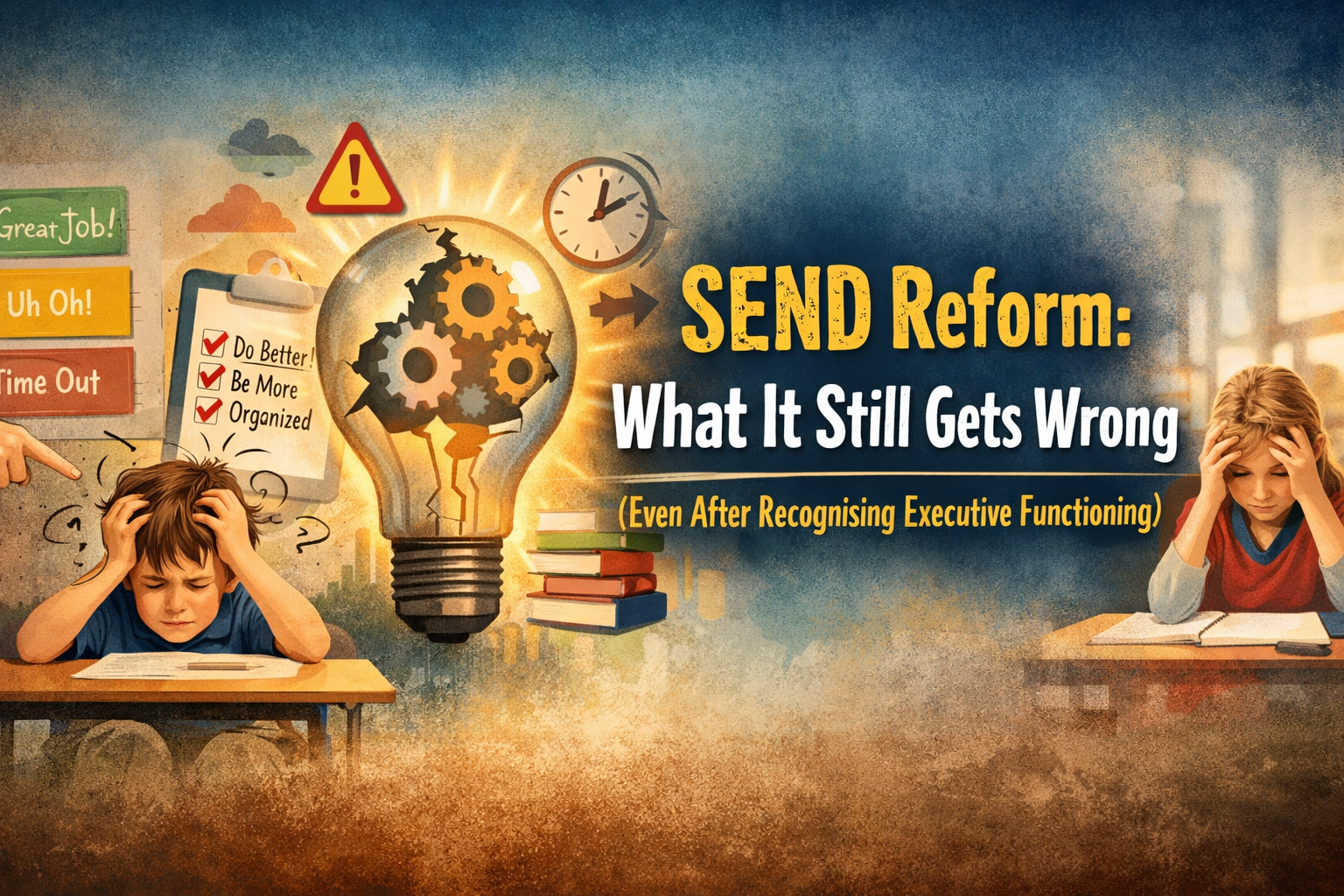
SEND Reform: What It Still Gets Wrong (Even After Finally Recognising Executive Functioning)
SEND reform is finally starting to recognise executive functioning, but that does not mean children will automatically get the right support. This blog looks at what could still go wrong if schools focus on expectations instead of understanding, scaffolding, and the environment around the child.

Awakening the Brain to Interact with Our Environment
Understanding how the brain processes sensory information is key to learning, behaviour, and daily life. This blog explores how our senses keep the brain alert and engaged with the world around us.

Understanding Social Communication and Its Challenges for Those Who Are Autistic
Social communication is about far more than spoken words. For autistic people, navigating non-verbal cues, conversation rules, and social expectations can be exhausting — and often misunderstood. This article explores why social interaction can be so challenging and how we can offer better support.

Dismantling the Myth: Why Neurodivergent Diagnosis Helps Children, Not Harms Them
Many claim that neurodivergent diagnoses “label” children unnecessarily — but this misunderstanding harms children far more than the diagnosis ever could. In this post, I dismantle the myth that identifying ADHD or autism is negative, and explain why recognition and understanding are essential for a child’s wellbeing, identity, and development.

The Intricate Link Between Low Dopamine, ADHD, and Depression
Low dopamine plays a major role in ADHD and mood. This post explains how dopamine affects focus, motivation and emotional wellbeing.

Understanding Autism in Girls: Recognising Distinct Signs and Supporting Neurodivergent Youth
Autism in girls is misunderstood and frequently overlooked. This blog explains the unique signs and offers clear support strategies for families.

Sensory Processing
This blog explains sensory processing, how it impacts behaviour, and how to create neuro-inclusive environments.