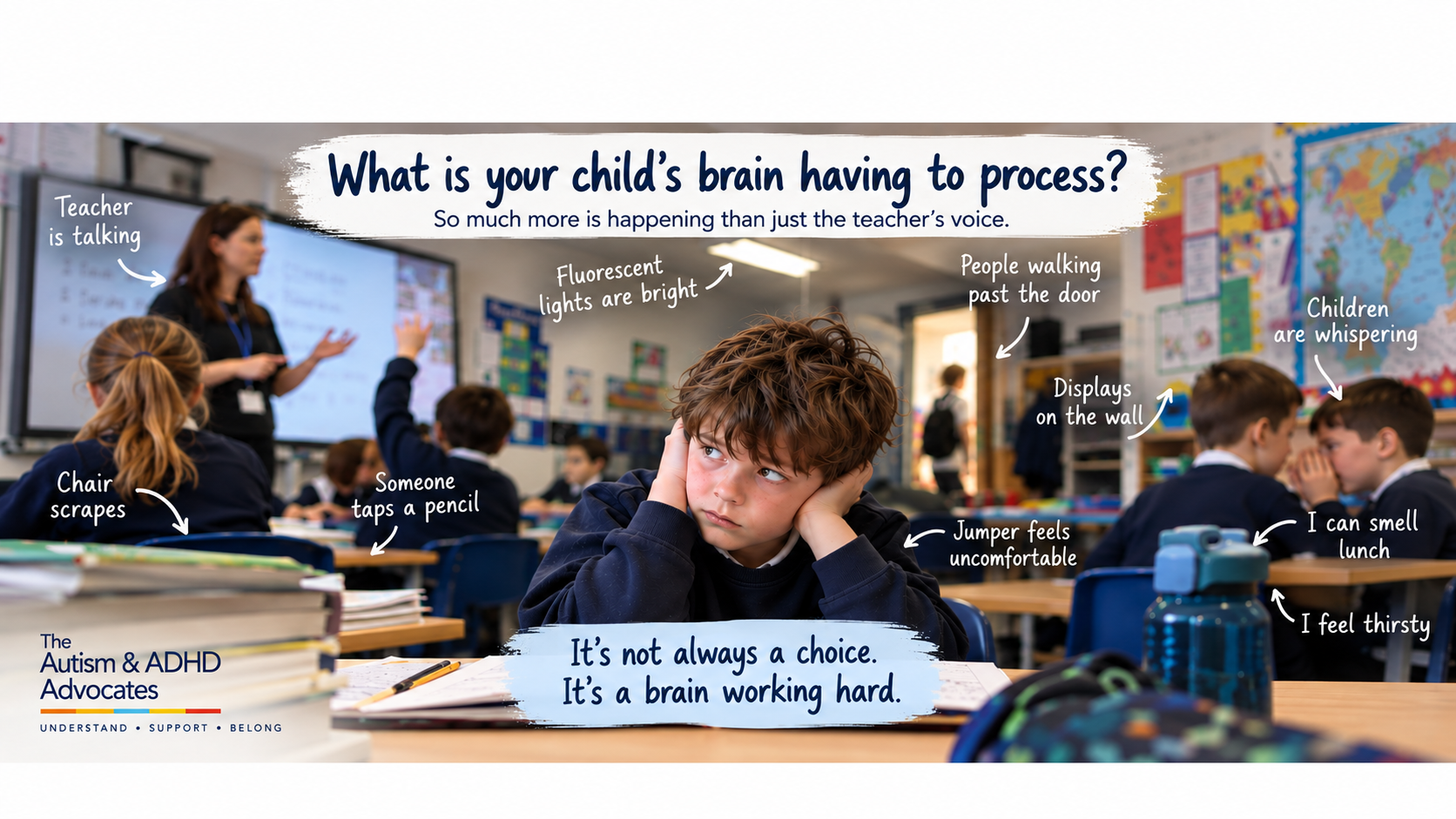
What Is Your Child’s Brain Having to Process Before They Can Even Start?
A child who appears distracted, slow to start or not to be listening may be processing far more than we realise. This blog explains sensory modulation, discrimination and praxis in simple terms, and shows how they can affect children in everyday situations.

Chronic Constipation: Could Your Child Have a Stressed Stomach?
Chronic constipation is not always just about diet or toileting. This blog explores how a child’s nervous system can affect the gut, why ongoing discomfort can reduce emotional control, and why parents should look beyond the behaviour they can see.
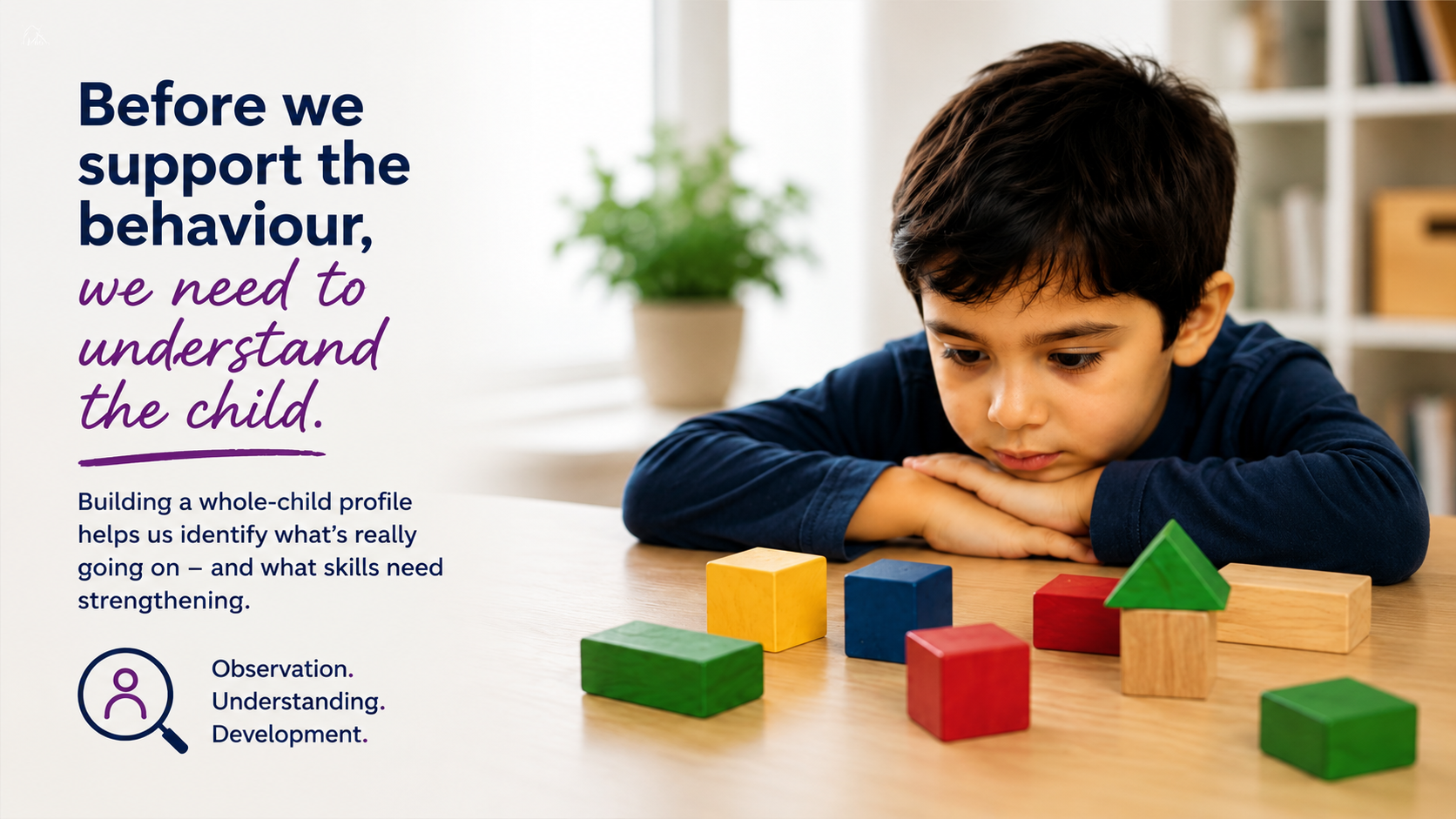
Before We Support the Behaviour, We Need to Understand the Child
We often notice the behaviour first. Interrupting, forgetting instructions, rushing, struggling with change or becoming stuck. But those behaviours can also give us clues about the underlying skills a child may be finding difficult to use. This blog explores why careful observation and cognitive understanding can help us build a fuller profile of the individual child.

The Abilities We Use to Learn Something New
Why can a child understand something one day and struggle with it the next? Learning something new relies on several underlying thinking abilities, including comprehension, memory, problem solving, evaluation and creativity. Understanding these abilities can help us look beyond what a child is struggling with and consider what may be happening underneath the learning.

PDA: Understanding the Reaction Without Removing Every Demand
What happens when a young person says no to something they actually want? This real-life example explores what can sit underneath a PDA response, how understanding can prevent unnecessary arguments, and why support shouldn't simply mean removing every demand.
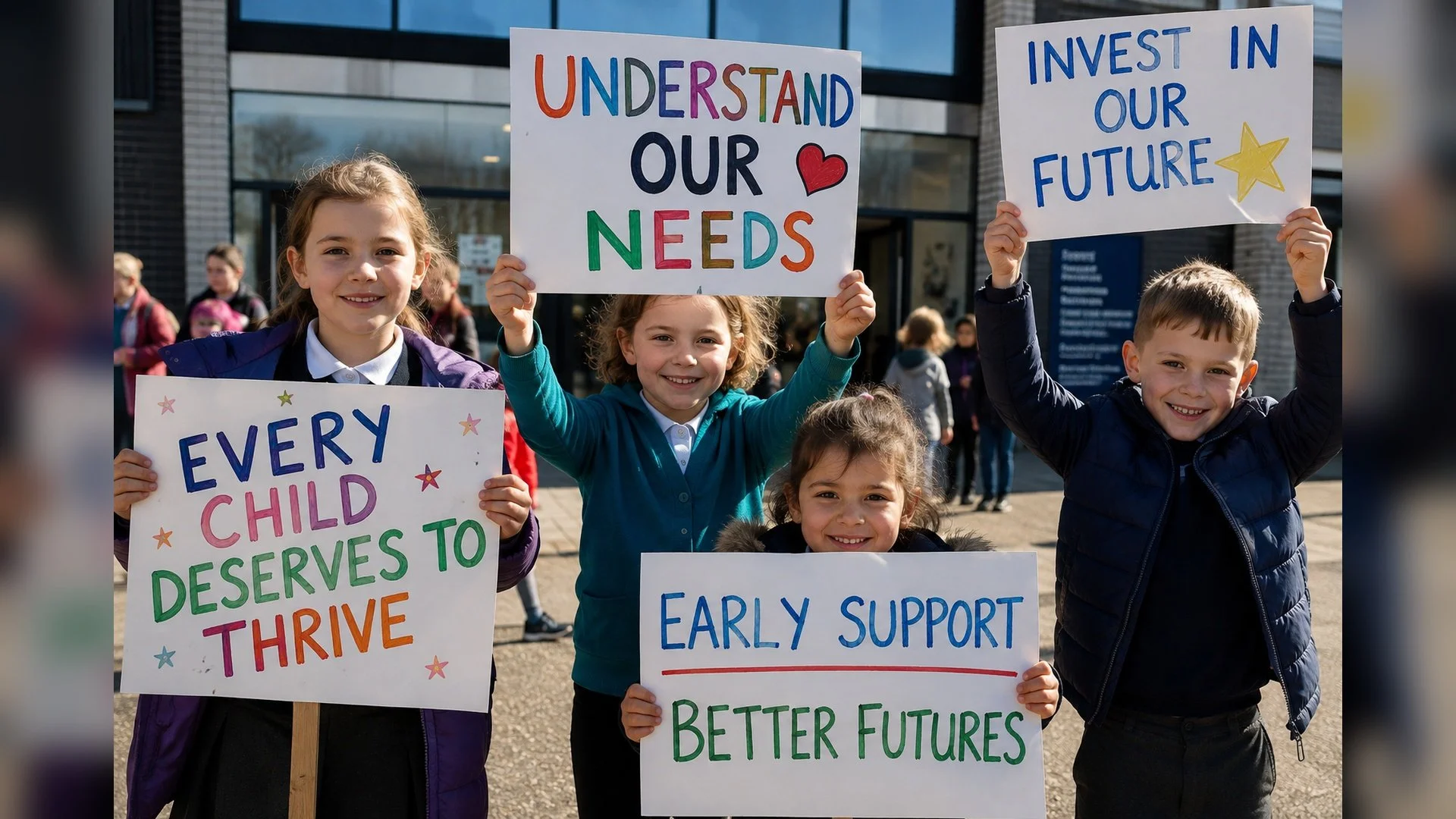
Schools Are Being Asked to Identify Needs Earlier, Could SOI Help?
The SEND White Paper sets out an ambitious vision for improving support for children and young people. But could schools go further by identifying the learning abilities behind the difficulties? This article explores how Structure of Intellect (SOI) assessments could complement existing practice by providing a practical, measurable framework for targeted intervention.

“But What If Something Goes Wrong?” When a Child Cannot Stop Expecting the Worst
Some children constantly ask, “What if something goes wrong?” This repeated catastrophising can be an overlooked sign that a child is struggling with anxiety and uncertainty.
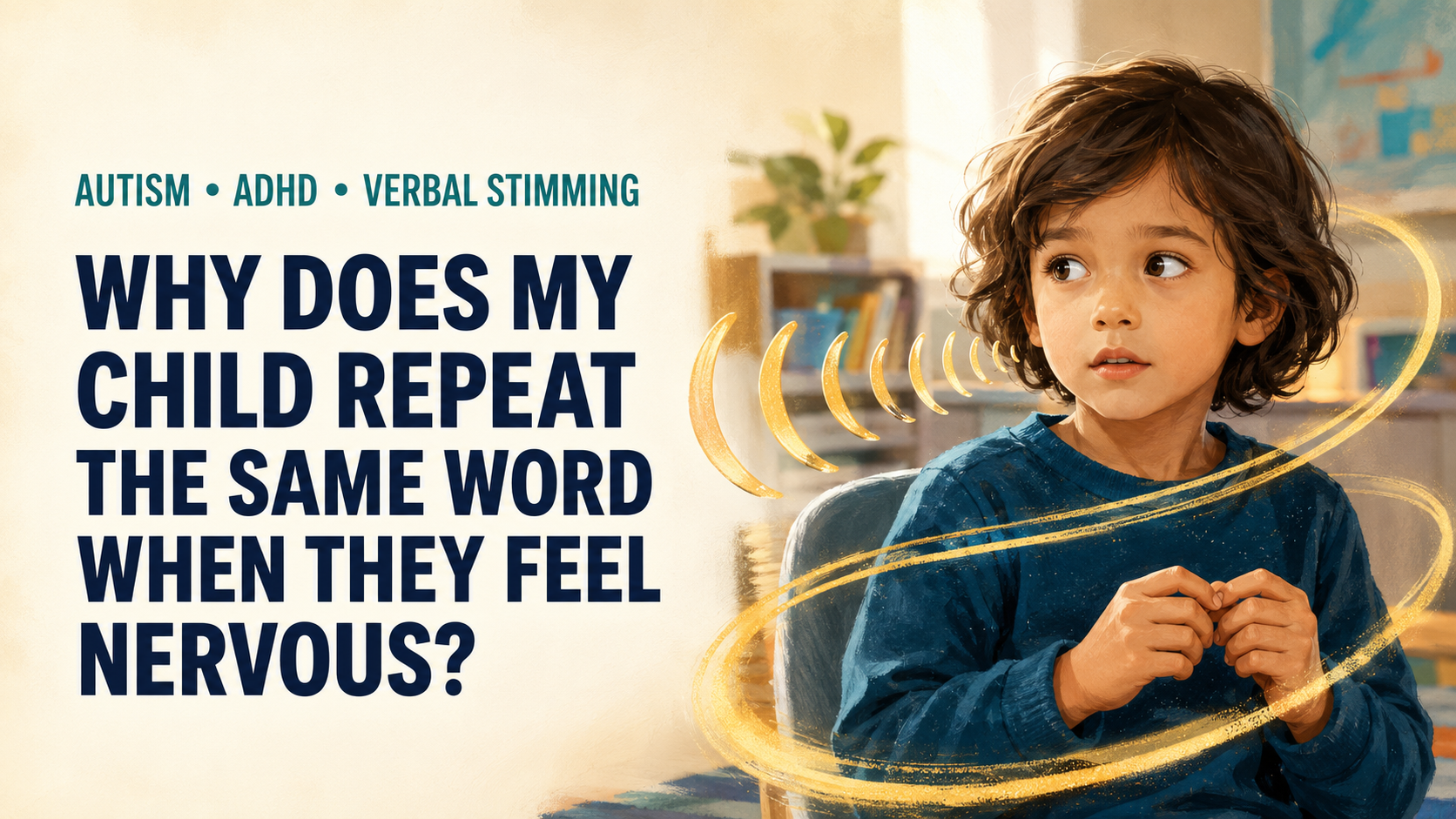
Why Does My Child Repeat the Same Word When They Feel Nervous?
A child repeatedly saying the same word may appear random, but it could be verbal stimming. For some autistic and ADHD children, it may be an important sign that they feel nervous, uncertain or overwhelmed.
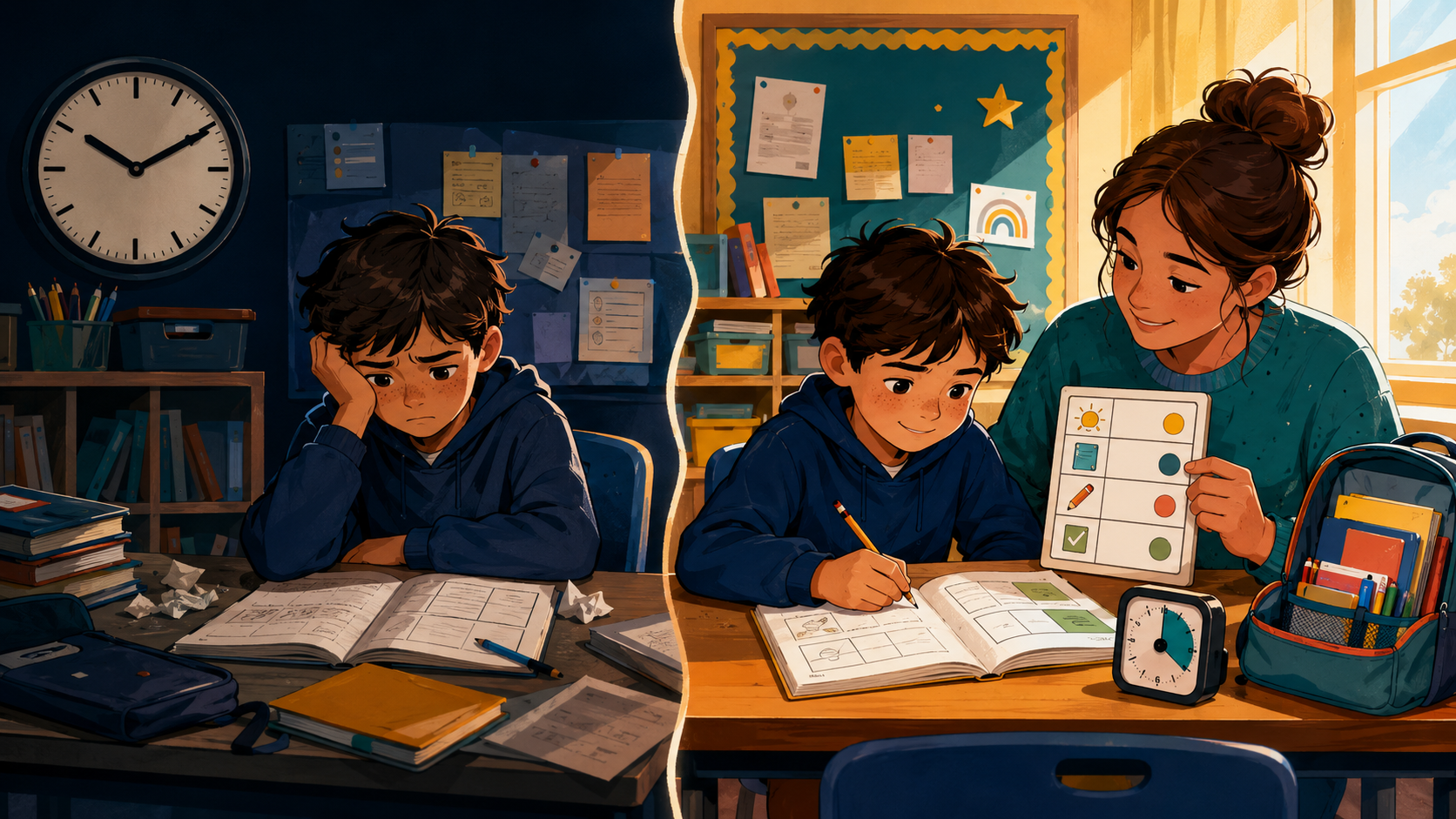
Accountability and Executive Function: Why Consequences Are Not Enough
Children need to learn responsibility, but consequences alone do not teach working memory, organisation, task initiation or emotional regulation. Supported accountability helps children repair what happened while developing the skills needed for next time.
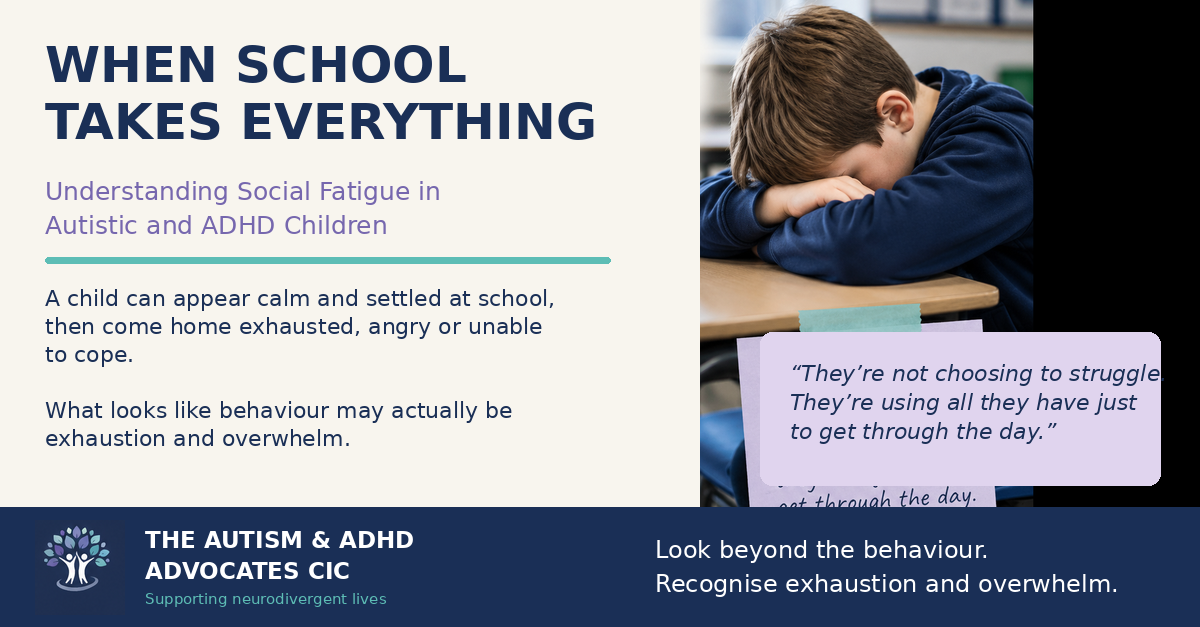
When School Takes Everything: Social Fatigue in Autistic and ADHD Children
A child may appear calm and settled throughout the school day, then come home exhausted, angry or overwhelmed. This blog explains social fatigue, masking and why behaviour after school may be a sign that a child has used all their energy trying to cope.
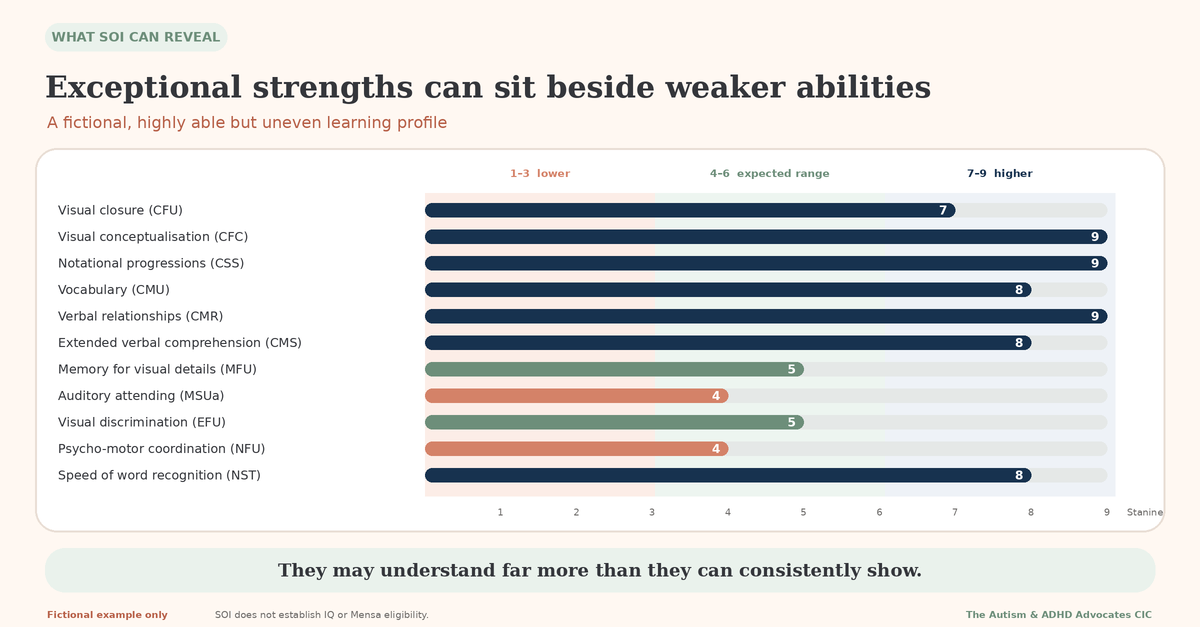
When a Child Is Clearly Bright, Why Do Some Things Still Feel So Hard?
A child can be exceptionally bright yet still struggle to follow instructions, remember details or show what they know. An SOI Learning Profile can reveal the uneven abilities behind this apparent contradiction.
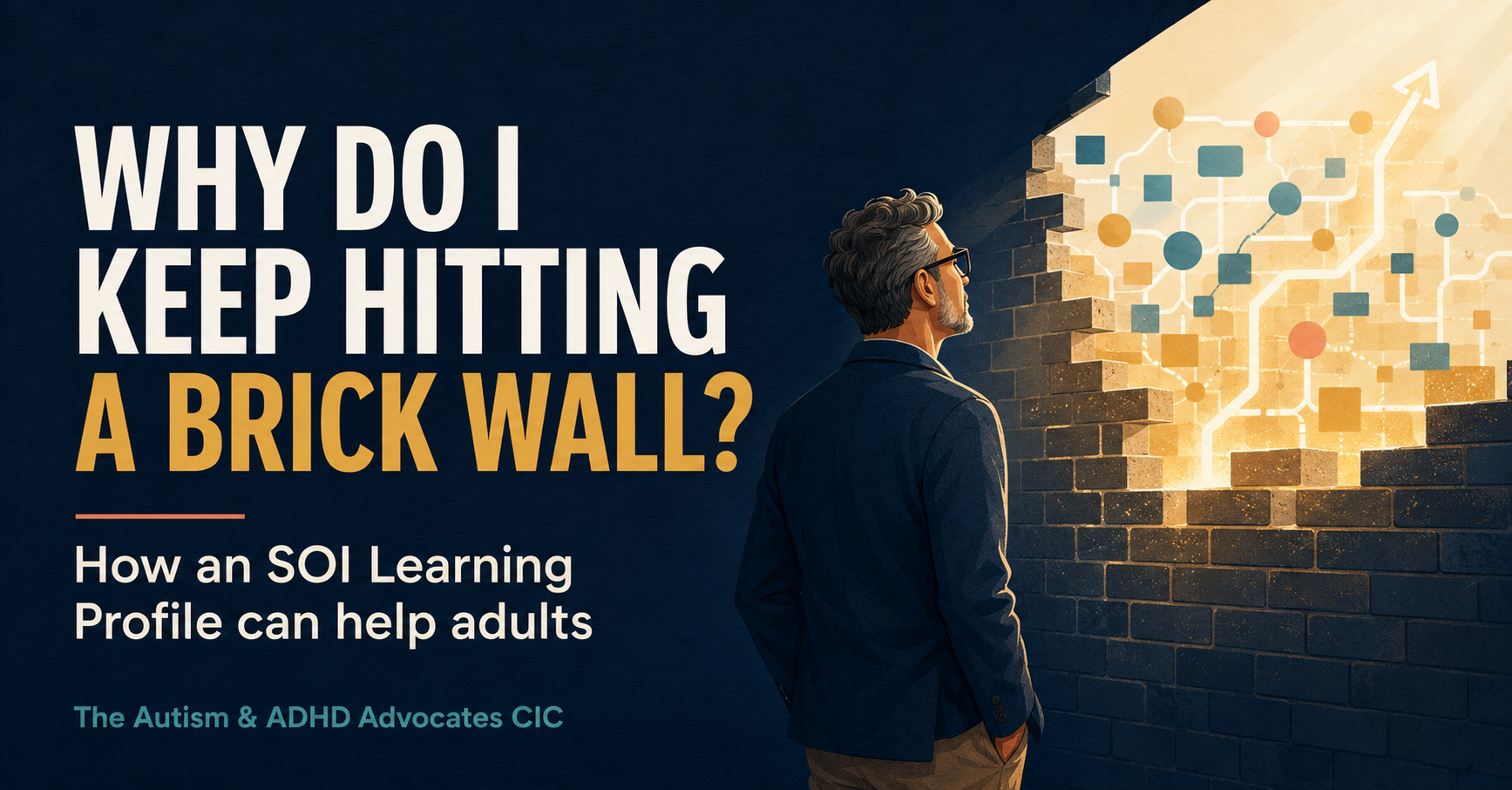
Why Do I Keep Hitting a Brick Wall? How an SOI Learning Profile Can Help Adults
Some adults know they are capable but still keep hitting the same brick wall at work, in learning or in everyday life. An SOI Learning Profile can reveal the uneven pattern of strengths and weaker abilities behind these difficulties, helping the person understand what is happening and what support may help.
Exclusions, Risky Behaviour and “Bad Choices”: What Are We Missing?
When a young person repeatedly makes risky choices, we often focus on their behaviour. But what if they struggle to think of another response, judge the consequences or use what they know in the moment? This blog explores how SOI Learning Profile Assessments can identify and strengthen the abilities behind decision-making.
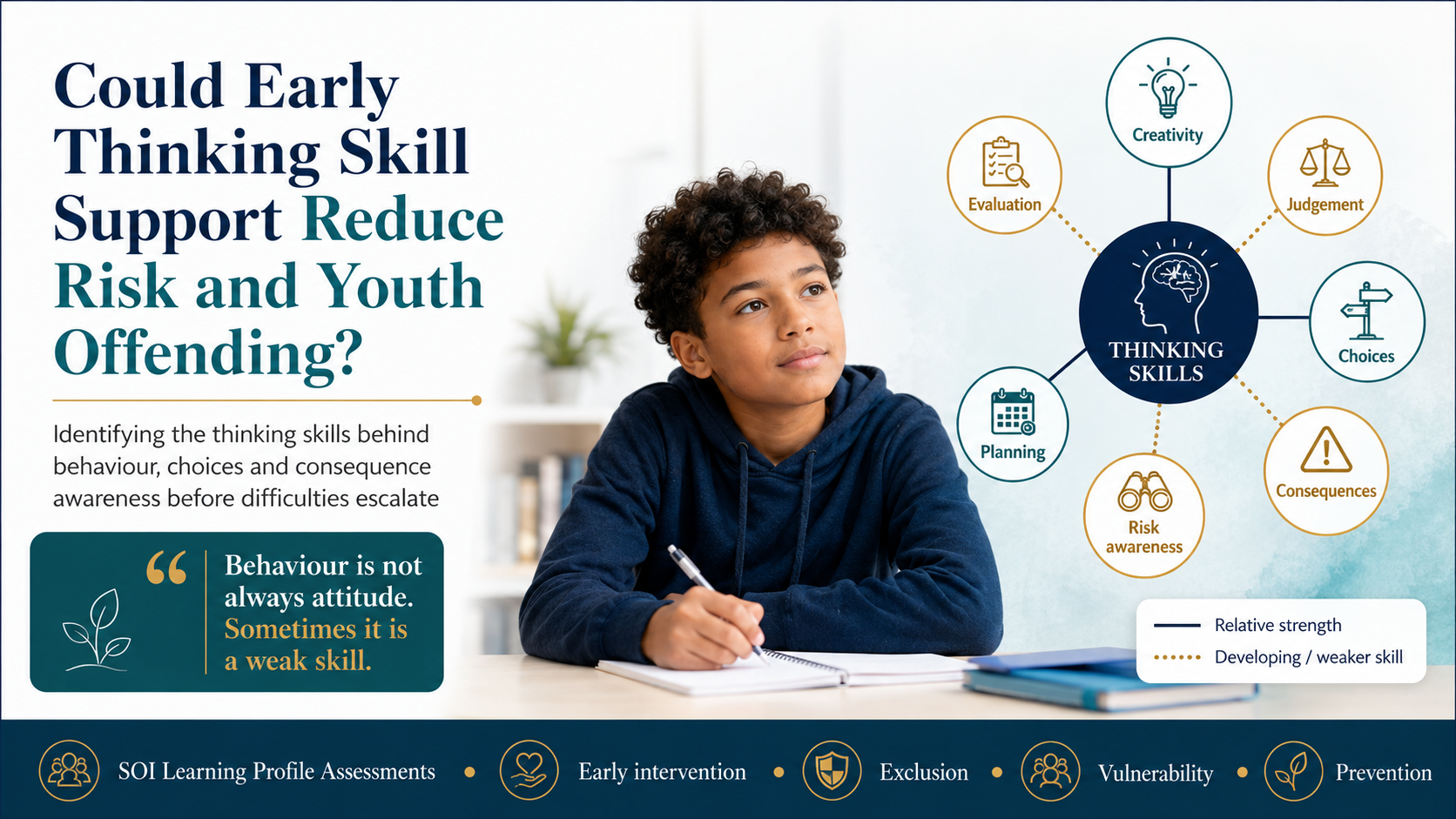
Could Early Thinking Skill Support Reduce Risk and Youth Offending?
Some children and young people are bright, creative and full of ideas, but still repeatedly end up in trouble. This blog explores whether early identification of thinking skill gaps could help reduce risk, exclusion, vulnerability and youth offending.
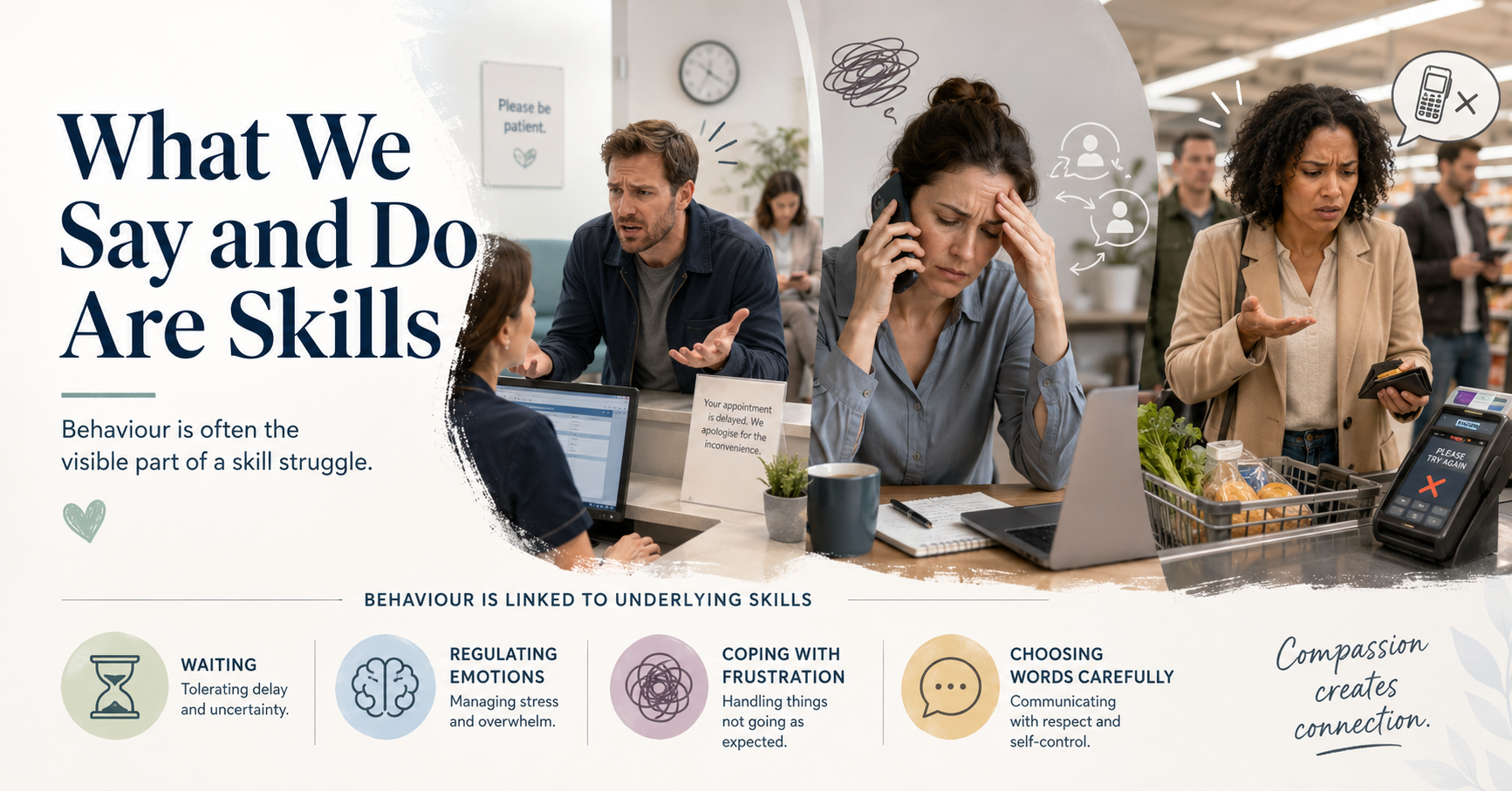
What We Say and Do Are Skills
What we say and do are not just choices, they are skills. This blog explores how behaviour can reflect difficulties with executive functioning, emotional regulation, sensory processing, anxiety and communication.
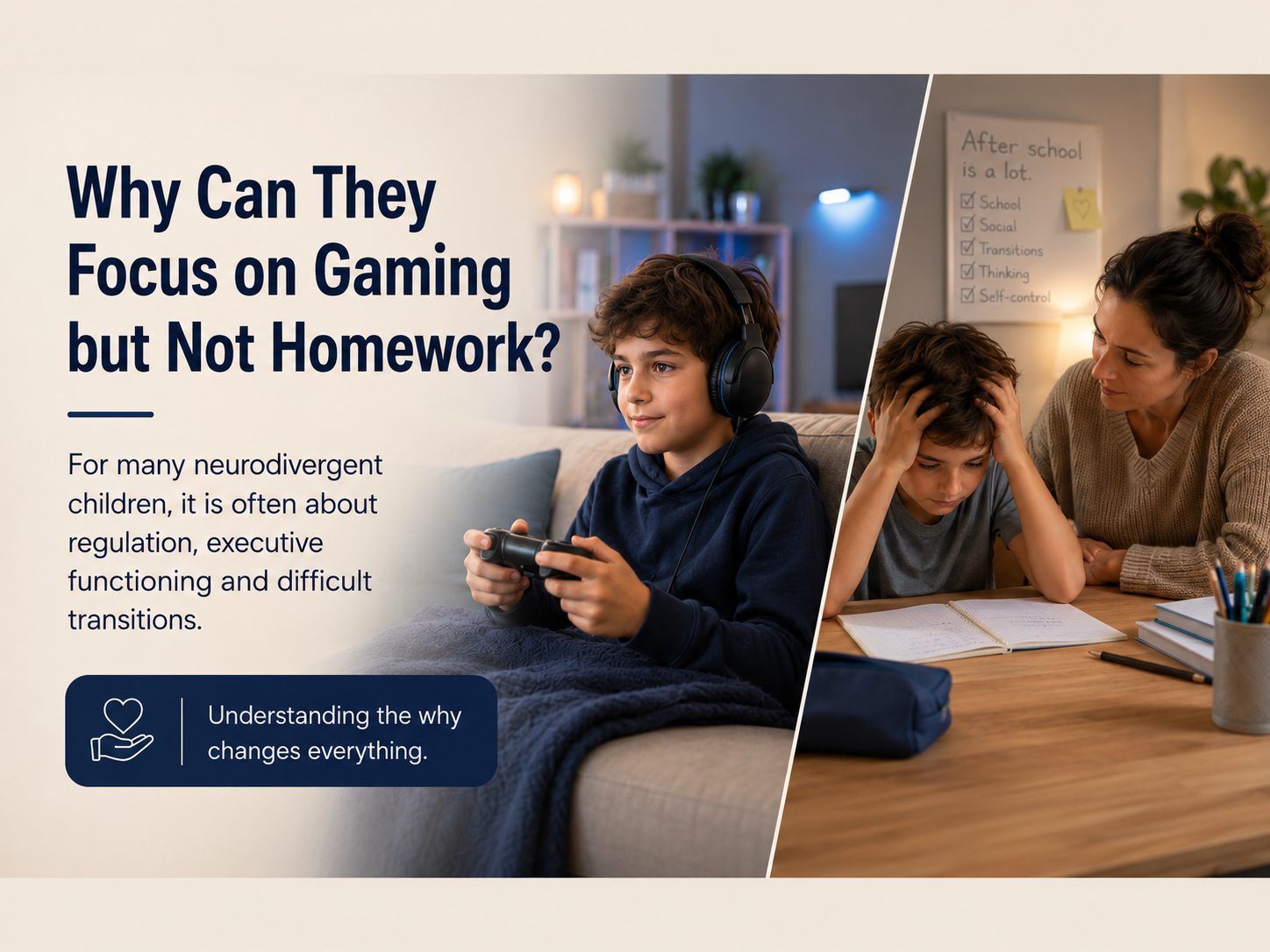
Why Can My Child Concentrate on a Game but Not Homework?
Screen meltdowns are often misunderstood as addiction, defiance or bad parenting. For many ADHD and neurodivergent children, gaming may be the only regulation tool they have left after a draining school day. This blog explains what may really be happening underneath.
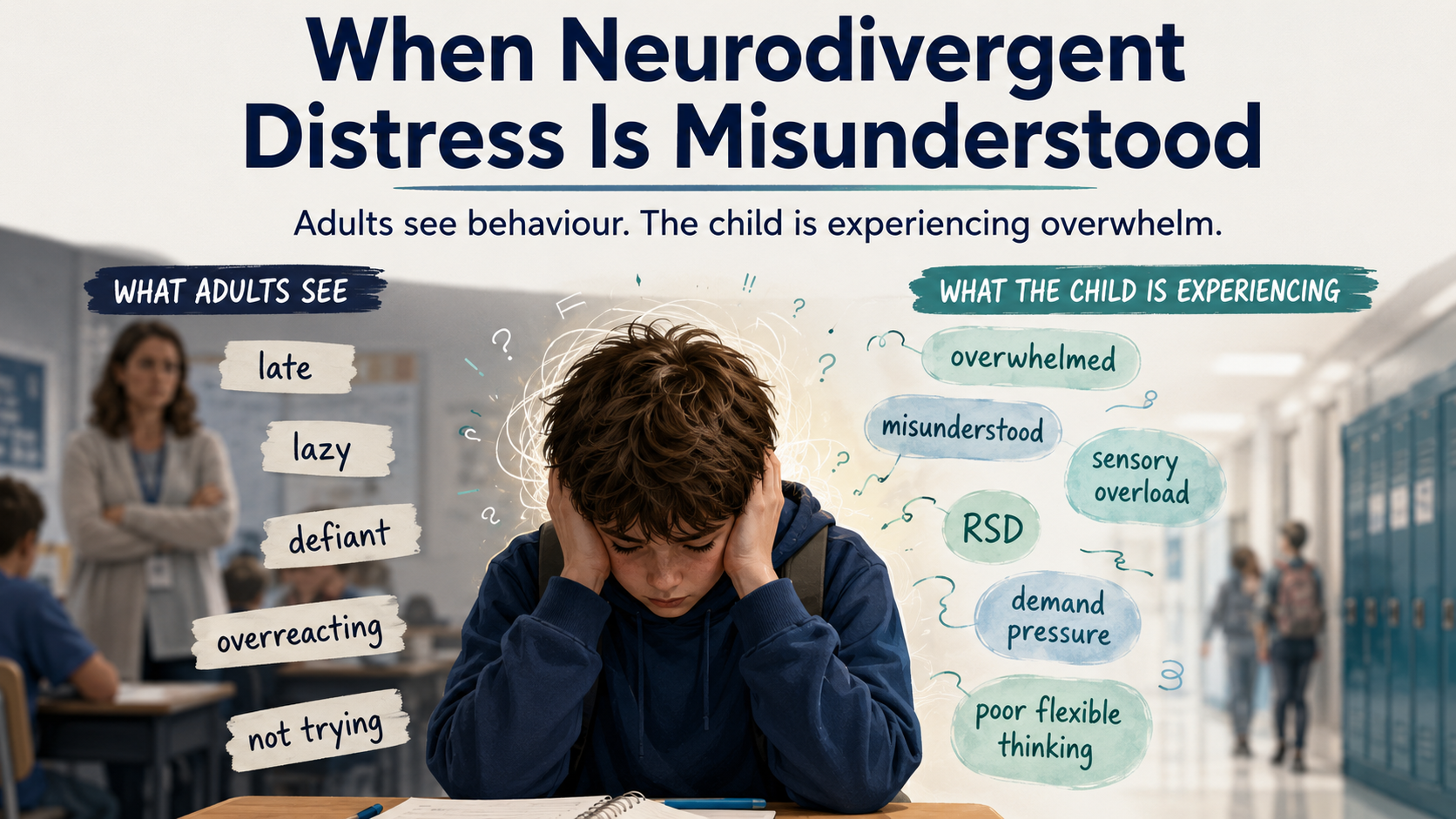
When Neurodivergent Children Are Misunderstood: The Hidden Distress Adults Keep Missing
Many neurodivergent children do not know they have ADHD, RSD, PDA-type demand anxiety, poor flexible thinking or sensory overload. They just know they keep being misunderstood. This blog explains why adults need to look beyond behaviour and recognise hidden distress before children reach crisis point.

When the Brain Feels Chosen: John Nash, Grandiosity and the Labels We Give People
Grandiose beliefs are often misunderstood as arrogance, defiance or attention-seeking. This blog reflects on John Nash, schizophrenia and why we need to look beneath behaviour before giving people labels.

Why I Leave Everything Until the Last Minute, And Why It Is Not Just Disorganisation
Some people are often called disorganised, impatient or last-minute. But what if the real difficulty is the uncomfortable gap between being ready and being able to go? This blog explores how executive functioning, waiting, time, transitions and emotional regulation can affect everyday life.
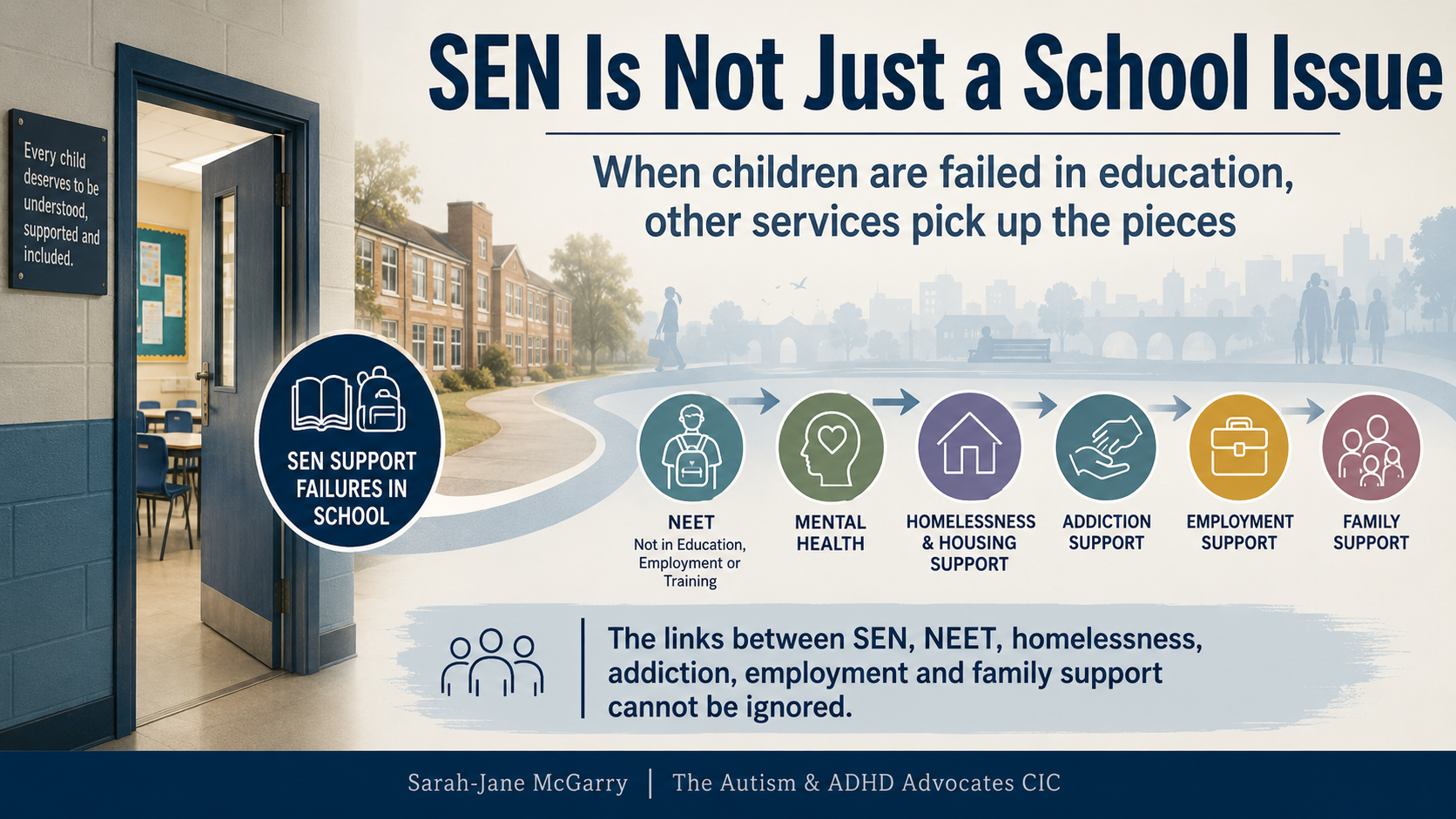
SEN Is Not Just a School Issue: When Children Are Failed in Education, Other Services Pick Up the Pieces
SEN is not just a school issue. When children are not properly understood or supported in education, the impact can follow them into adulthood. This blog explores how unmet SEN can link to school refusal, exclusion, poor mental health, NEET risk, unemployment, addiction, homelessness and family crisis.