
What We Say and Do Are Skills
What we say and do are not just choices, they are skills. This blog explores how behaviour can reflect difficulties with executive functioning, emotional regulation, sensory processing, anxiety and communication.

Why I Leave Everything Until the Last Minute, And Why It Is Not Just Disorganisation
Some people are often called disorganised, impatient or last-minute. But what if the real difficulty is the uncomfortable gap between being ready and being able to go? This blog explores how executive functioning, waiting, time, transitions and emotional regulation can affect everyday life.
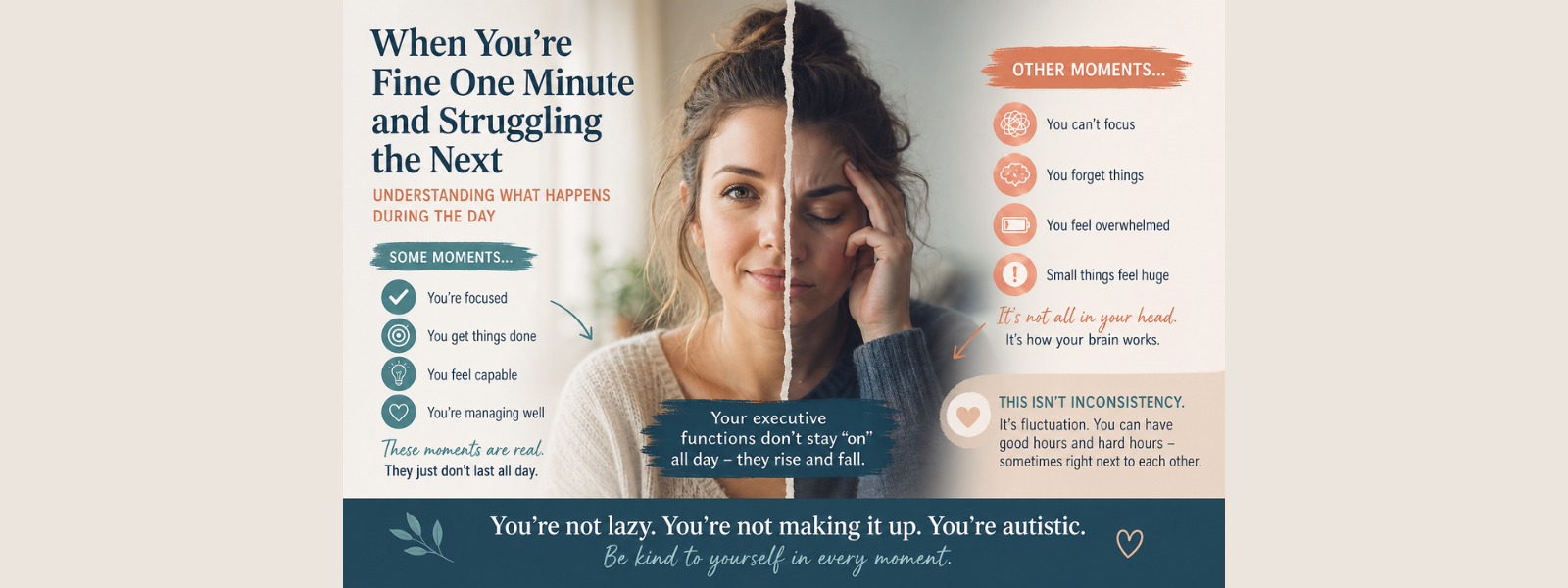
When You’re Fine One Minute and Struggling the Next
If you’re autistic or have ADHD, your day doesn’t stay steady. You can be coping one minute and struggling the next. This blog explains why your capacity changes across the day, what’s happening underneath, and how to recognise the signs before everything tips over.

Why Some Children Can’t Regulate Early Enough
Self-regulation doesn’t start with behaviour. Many children struggle not because they won’t calm down, but because they don’t recognise the early signals in their body. This blog explains the missing step in self-regulation and why behaviour often comes too late.
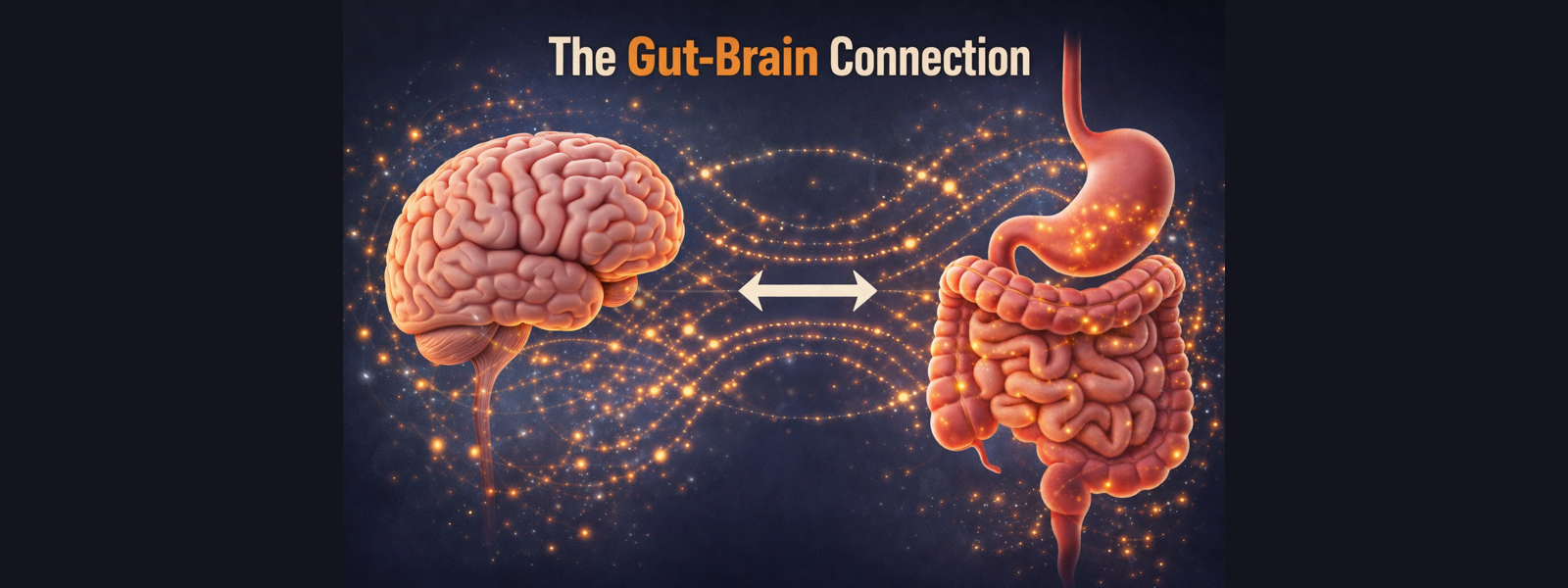
The Microbiome, Gut Health and Behaviour in Children - Is it really “just behaviour”?
Many autistic and ADHD children experience gut issues such as reflux, constipation, and food sensitivities. This blog explores how the microbiome and gut–brain connection can impact behaviour, mood, and emotional regulation.
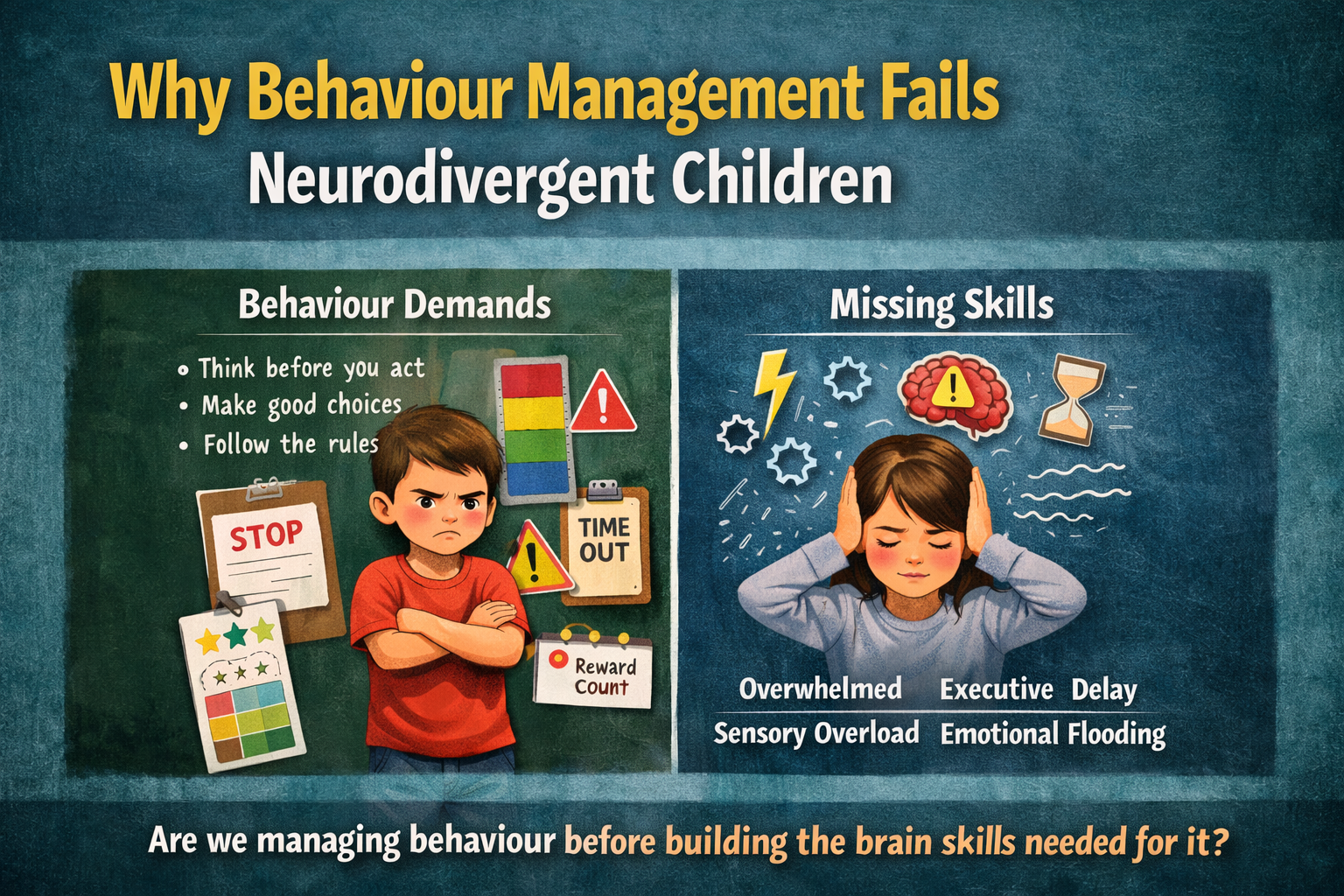
Why Behaviour Management Fails When the Skills for Emotional Intelligence Haven’t Been Built Yet
Behaviour management often assumes children can regulate emotions and make better choices. But emotional intelligence depends on underlying brain development. For many autistic children and those with ADHD or SEND, behaviour reflects overwhelmed capacity — not defiance. This article explores why skills must be built before behaviour can change.

Intense Emotions and ADHD
Emotional regulation is one of the most misunderstood parts of ADHD. This post explores seven key truths about why emotions feel so intense, what’s happening in the brain, and how understanding this can improve daily life and relationships.

Understanding Interoception and Alexithymia
A clear, relatable explanation of interoception and alexithymia — why autistic and ADHD people may not feel or express emotions the way others expect, and how internal body signals shape emotional awareness.