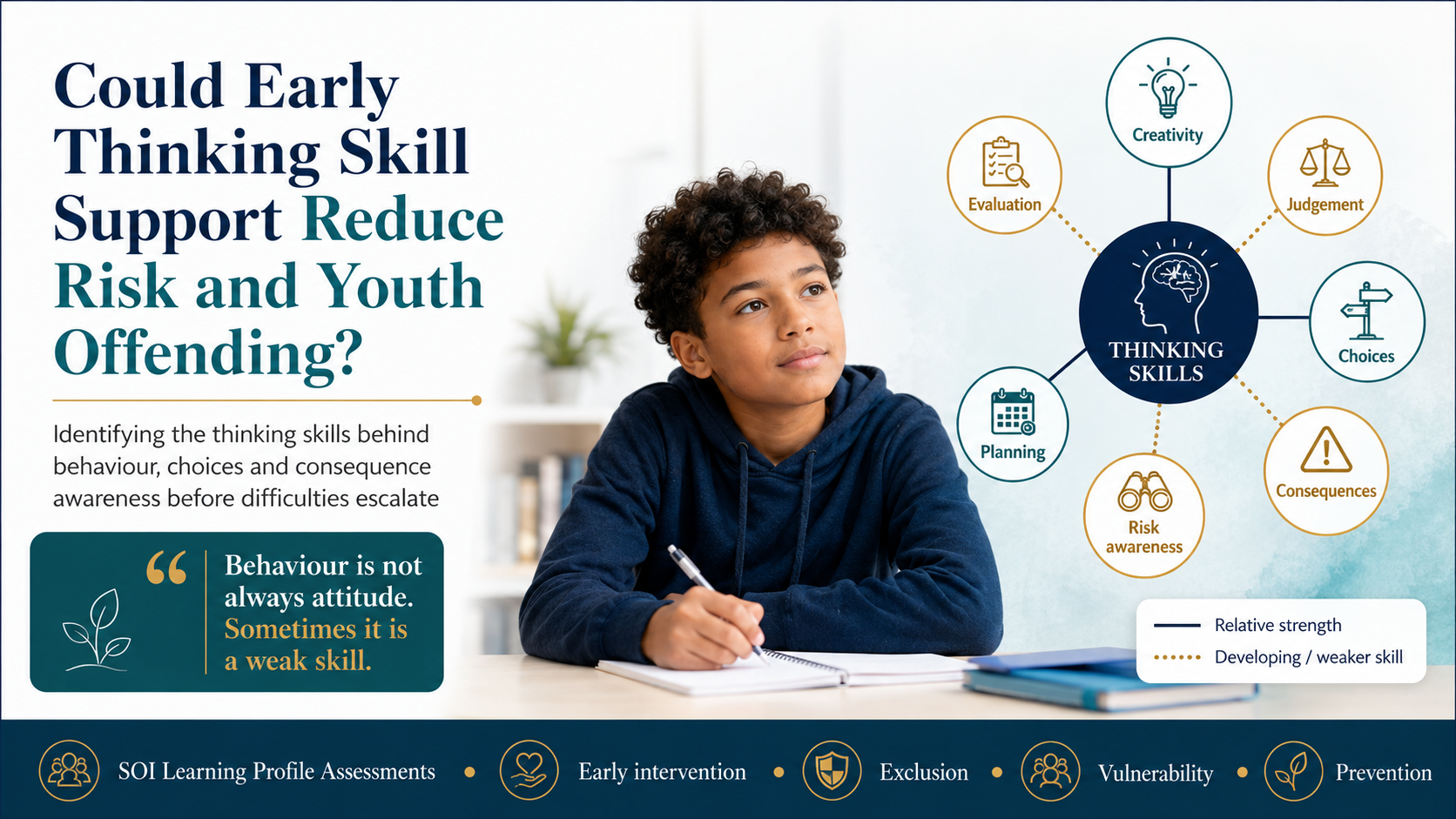
Could Early Thinking Skill Support Reduce Risk and Youth Offending?
Some children and young people are bright, creative and full of ideas, but still repeatedly end up in trouble. This blog explores whether early identification of thinking skill gaps could help reduce risk, exclusion, vulnerability and youth offending.
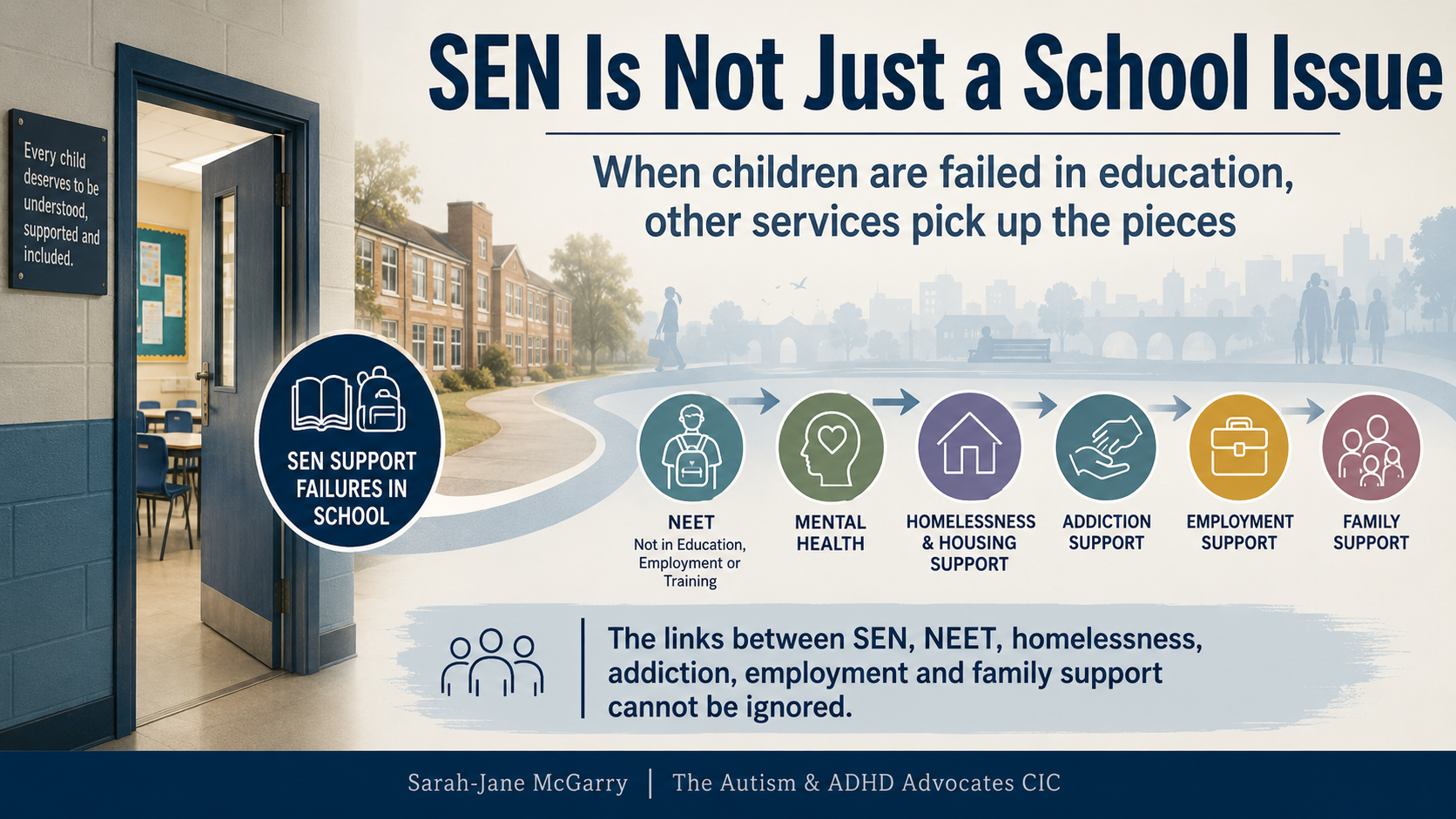
SEN Is Not Just a School Issue: When Children Are Failed in Education, Other Services Pick Up the Pieces
SEN is not just a school issue. When children are not properly understood or supported in education, the impact can follow them into adulthood. This blog explores how unmet SEN can link to school refusal, exclusion, poor mental health, NEET risk, unemployment, addiction, homelessness and family crisis.
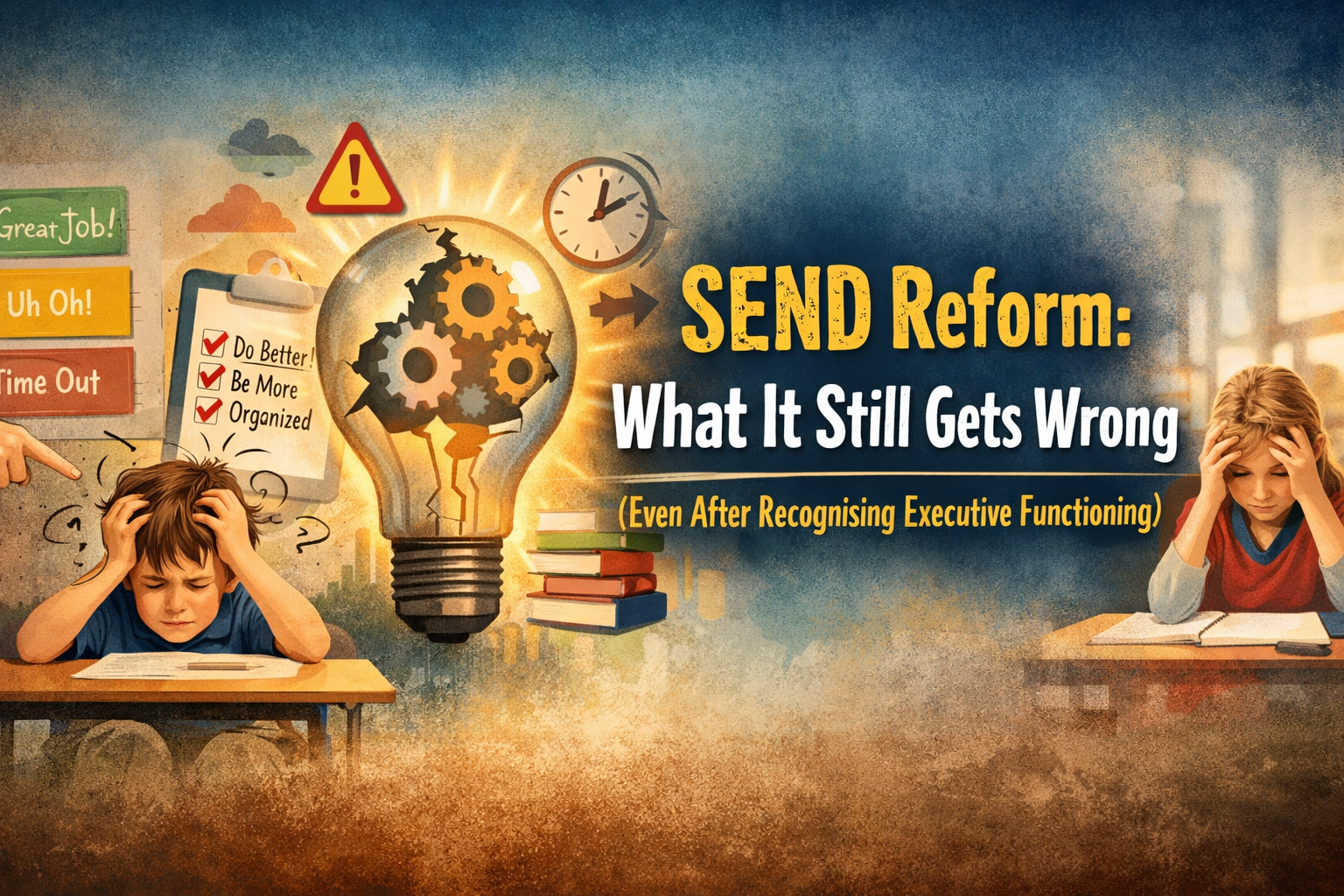
SEND Reform: What It Still Gets Wrong (Even After Finally Recognising Executive Functioning)
SEND reform is finally starting to recognise executive functioning, but that does not mean children will automatically get the right support. This blog looks at what could still go wrong if schools focus on expectations instead of understanding, scaffolding, and the environment around the child.
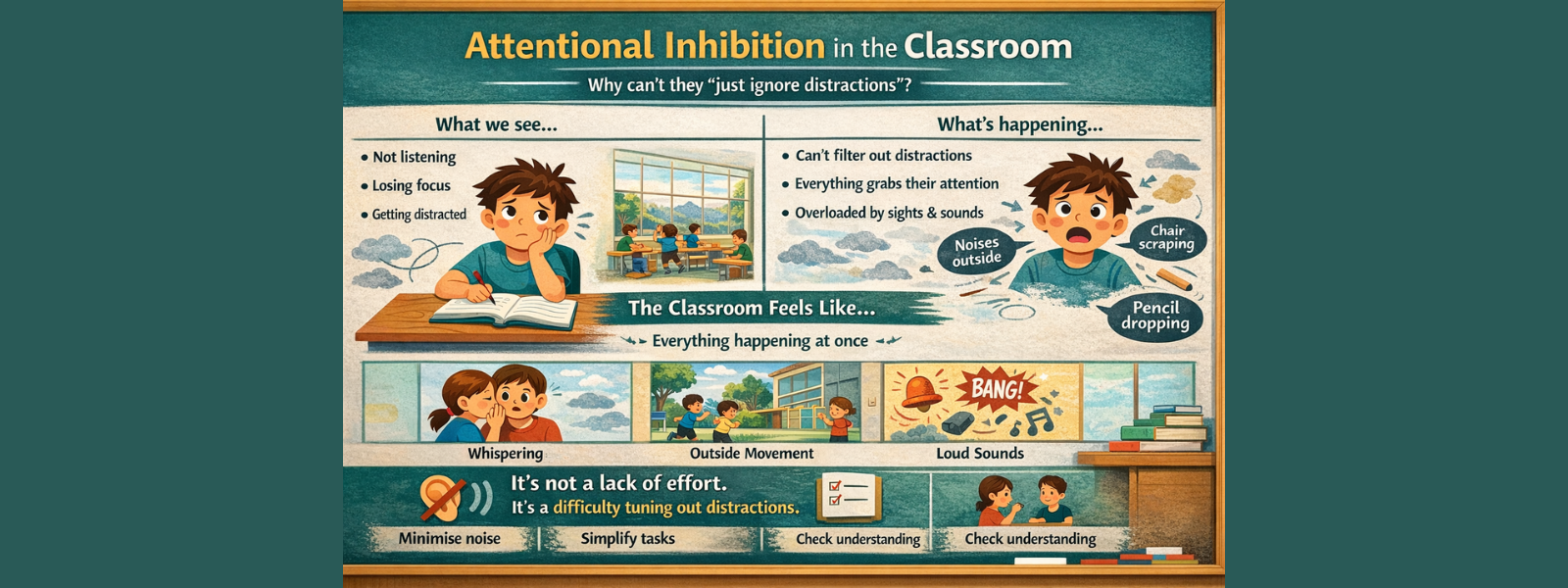
Why Some Children Can’t “Just Ignore Distractions” in the Classroom
In a busy classroom, focus isn’t just about trying harder. For some children, the real challenge is filtering out distractions. This blog explains attentional inhibition, why some children can’t “just ignore it,” and how understanding this can change the way we support them.
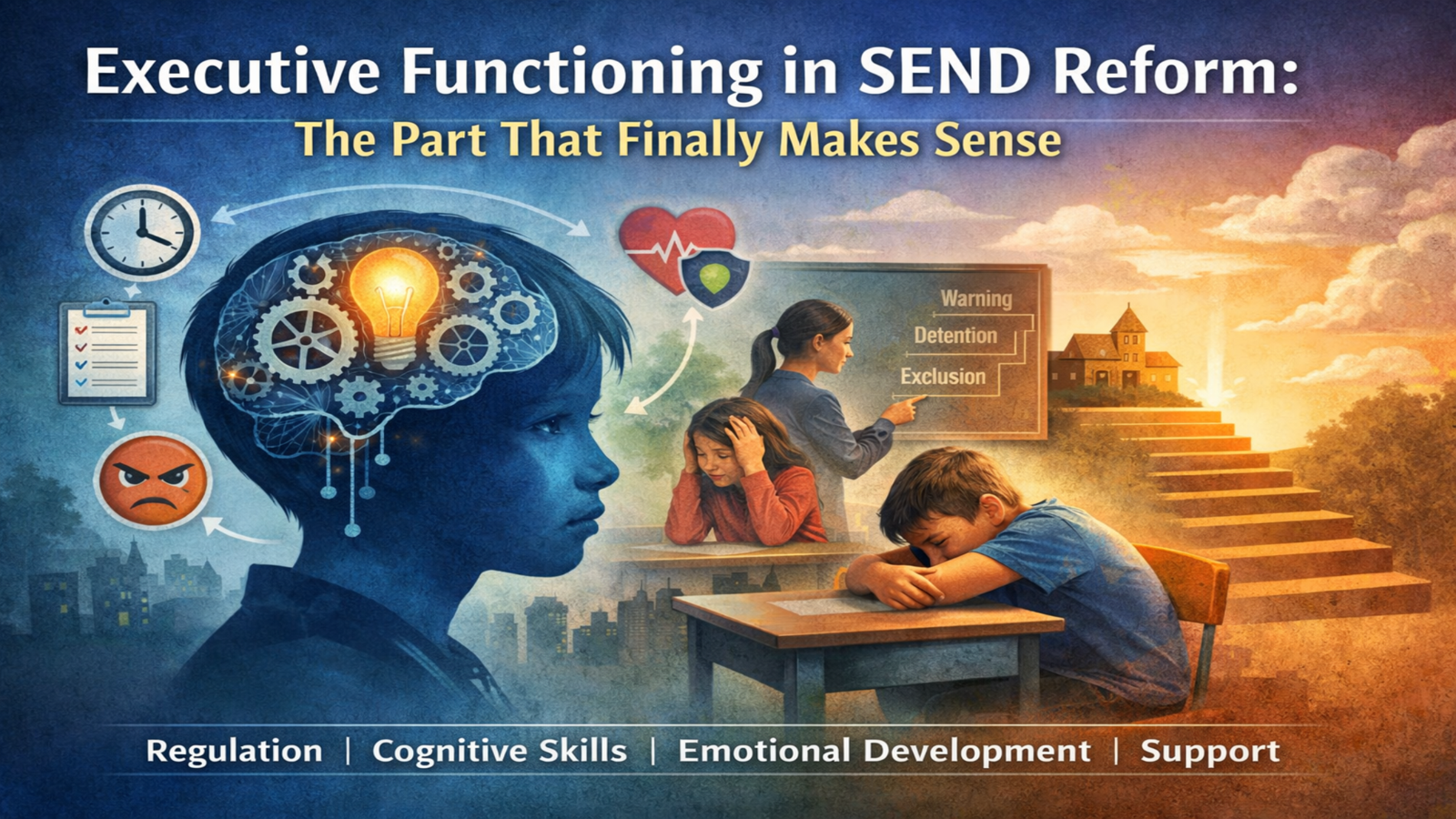
Executive Functioning in SEND Reform: The Part That Finally Makes Sense
SEND reform is beginning to recognise executive functioning as central to learning. Understanding how regulation and development underpin these skills may be key to reducing escalation and supporting children earlier in education.